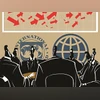
It has not escaped notice that, while India is rhetorically strong in support of reforming multilateral institutions, something which increases the power of the developing world at the expense of the traditional Western establishment, on this occasion the Indian government was not enthusiastic about changing the structure of control at the IMF. As it stands, the IMF is controlled by the European Union, which appoints its head and has a large share of the vote. The United States, which contributes over 17 per cent, also has a veto. The country whose contribution is most out of line with its economic heft and power is China, which was reportedly pushing hard for a change in the structure of the IMF. There is good reason to complain about how the Western control of the institution leads it into biased and outright incorrect decisions.
Rules are constantly broken for countries that are considered part of the charmed European circle or are of relative geopolitical importance to the United States or the European Union. For example, at the time of the eurozone crisis, the largest ever bailout by the IMF was organised for the Greek government, without all the conditions that other countries in the developing world have to go through. This might be because Greece is a member of the European Union and indeed the eurozone, or it might be simply that countries in Africa and Asia are considered inherently untrustworthy by the Western nominees who run the IMF. And most recently the rules on IMF lending were changed in order to ensure that Ukraine, which is in the middle of a war, and in any case has an abysmal governance record, received funds from the institution although no country undergoing such a conflict was previously lent to.
But while Western dominance at the IMF might lead to such unjust situations, clearly reform that allows Beijing to get more power — or even a veto — over legacy multilateral institutions is considered dangerous by New Delhi. This is an indication of the dilemma that India faces as it seeks to reform multilateralism to give the Global South a greater voice without in that very process empowering a strategic rival in China. No obvious answer presents itself — which is why, in the end, India has been forced to defer a choice and leave the West in charge.


 "world bank IMF meeting")