Saturday, January 17, 2026 | 09:26 AM ISTहिंदी में पढें
Business Standard
Notification Icon
userprofile IconSearch

A question of propriety

Timing of enforcement action must be questioned
kejriwal in court,  Arvind Kejriwal,  Rouse Avenue Court
premium

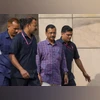
Delhi Chief Minister and AAP Convenor Arvind Kejriwal leaves from the Rouse Avenue Court in the excise policy-linked money laundering case, in New Delhi, Thursday, March 28, 2024. (Photo: PTI)

Business Standard Editorial Comment Mumbai

Listen to This Article

Delhi Chief Minister Arvind Kejriwal has been remanded in judicial custody till April 15 by a special court in connection with an alleged money-laundering case related to a now scrapped Delhi liquor licensing policy case after his remand with the Enforcement Directorate (ED) ended. Mr Kejriwal, the first sitting chief minister to be put behind bars, was arrested by the ED on March 22 under the stringent and controversial Prevention of Money Laundering Act (PMLA), where bail is difficult to obtain.

The ED had sought 15-day judicial custody from the special court to interrogate him, citing “non-cooperation” by Mr Kejriwal. Whatever the merits of the case, two issues concerning best practices in a democratic polity demand attention from the institutions entrusted with safeguarding them — the Election Commission (EC) and the Supreme Court.
 
The first is the propriety of Mr Kejriwal’s arrest by an enforcement arm of the government just weeks before parliamentary elections are due. More so, when the alleged infraction concerns a case that dates back two years. As with the ED case against the CPI(M) in Kerala and the recent income-tax notice to the Congress, which also dates back several years, the action against Mr Kejriwal surely merited intervention by the EC because of the timing.

On Monday, the income-tax (I-T) department assured the Supreme Court, hearing an appeal by the Congress against the I-T demand, that it would not take any coercive steps to recover its demand of Rs 3,500 crore before the elections. Though this offers the national party some relief, it does not address the core question of the timing of the I-T department’s move.
 
No less pertinent is the Supreme Court’s promise to review its earlier judgment on the PMLA, which has been hanging fire for some months. The original judgment of July 27, 2022, by a three-judge Bench had generated considerable controversy because it conferred on the ED virtually unchecked powers to arrest, summon, and raid individuals while depriving an accused of his or her basic rights.

The judgment upheld several conditions for bail which are virtually impossible to meet, apart from transgressing settled law. The first is for the individual to prove he is not guilty of money laundering, an inversion of the legal principle of a defendant being innocent until proven guilty. The second is for the accused to prove that he is unlikely to commit an offence when out on bail. This apart, the accused may not get a basic copy of the Enforcement Case Information Report outlining the ED’s case against him.
 
Last year, the Supreme Court constituted a three-judge Special Bench to hear review petitions filed against the judgment and hearings were scheduled to begin in October 2023. That Bench was dissolved, first because the Union government sought more time to prepare, and, second, because one of the judges on it was retiring within a month, which begs the question why he was selected in the first place. Since then, however, the progress has been snail-paced. Though a replacement for the retired judge was found, the reconstituted Special Bench in March posted the date for reconsidering the judgment to July 2024, citing, among other things, a heavy caseload. Such delays do not bode well for the future of Indian democracy.