


Back in the sun: Patient and constructive diplomacy pays off in Maldives
As the recent reset with Sri Lanka has demonstrated, mature responses to geopolitical pressures can be as effective as the exercise of hard power
 "Maldives president Muizzu with PM Narendra Modi")
premium
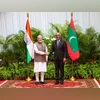
Prime Minister Narendra Modi with Maldivian President Mohamed Muizzu | Credit: X/@narendramodi
Listen to This Article
With a red carpet, a 21-gun salute, a guard of honour, and the nation’s highest award for the Indian Prime Minister, the Maldives and India signalled a critical reset of relations, which had touched the nadir in 2023. Then, newly elected Maldivian President Mohamed Muizzu demanded the withdrawal of 90 Indian military persons, stationed there for medical evacuation and maritime surveillance, on the grounds that the decades-long presence infringed on Maldivian sovereignty. An agreement with China for “non-lethal” weapons supply followed a month later. But the tensions between New Delhi and Male date back 11 years, when the Maldivian government cancelled an airport-construction project by Bengaluru-based GMR group, then its biggest foreign investment project at $511 million, allegedly at Beijing’s behest. Since then, the island-nation enthusiastically signed on to China’s Belt and Road Initiative (BRI) with projects for an airport upgrade, a major bridge and low-cost housing. Aware of the growing China factor in this island chain, strategically placed along major Indian Ocean shipping lanes, India chose patient, constructive diplomacy over confrontation to rebuild relations.