


Dissanayake's India visit marks positive shift in Sri Lanka's foreign ties
On Monday, statements from Mr Dissanayake assured India that he would not allow Sri Lankan territory to be used in a way that would be detrimental to India's interests
 "Modi, PM Modi, Anura Kumara Dissanayake")
premium
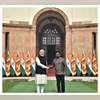
Sri Lanka’s newly elected President Anura Kumara Dissanayake with Indian PM Narendra Modi | Photo: X@MEAIndia
Listen to This Article
Sri Lanka’s newly elected President Anura Kumara Dissanayake’s choice of India for his first overseas visit signals a positive dynamic in ties between the two countries. Mr Dissanayake, who heads the Marxist-leaning Janatha Vimukthi Peramuna (JVP), the senior partner in the ruling National People’s Power coalition, was seen as ideologically leaning towards China. Beijing already wields considerable power over the island-nation’s political economy as its biggest bilateral lender and a top source of foreign direct investment. At the same time, the JVP has been anti-Indian, having led the opposition, often violent, to Indian intervention in Sri Lanka in the late 1980s after accords saw the introduction of Indian soldiers in the Sri Lankan civil war with the Tamil separatists. With the emergence of China’s aggressive Mission Indian Ocean, which targets India, New Delhi’s concerns had multiplied. On Monday, statements from Mr Dissanayake assured India that he would not allow Sri Lankan territory to be used in a way that would be detrimental to India’s interests. This was reflected in an emollient joint statement that spoke of the two countries’ shared security interests and the need for regular dialogue based on mutual trust and transparency.