Thursday, January 01, 2026 | 01:46 PM ISTहिंदी में पढें
Business Standard
Notification Icon
userprofile IconSearch

Poster child of negligence

Billboard collapse reflects a chronic failure of civic authorities
billboard collapse,hoarding collapse,hoarding collapse Mumbai
premium

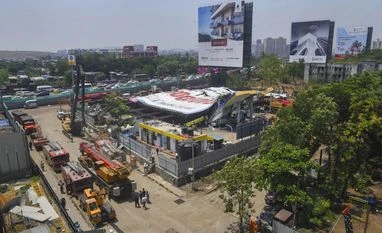
Rescue and relief work underway near the site of the hoarding collapse at Ghatkopar, in Mumbai, Tuesday, May 14, 2024. At least 14 persons were killed and 76 others injured on Monday night when a 100-foot tall illegal billboard fell (Photo:PTI)

Business Standard Editorial Comment

Listen to This Article

The collapse of a billboard in Mumbai, killing 14 people and injuring 75, presents yet another reminder of the seam of negligence that runs through civic authorities in India’s cities. As investigations are rapidly revealing, there was almost nothing that can be described as above board about this saga. The so-called entrepreneur who won the contracts for putting up hoardings and banners from both the Indian Railways and the Brihanmumbai Municipal Corporation (BMC) has been known for allegedly violating rules, including poisoning and cutting trees to accommodate hoardings.  The collapse of the hoarding at the fuel station in Ghatkopar offers a model of his modus operandi. The hoarding was an enormous 120x120 feet, even making it to the Limca Book of Records. It was three times the size permitted by the BMC — 40x40 feet. More remarkably, the problems with the company concerned, called Ego Media, had been flagged as early as March 2023. In that month, the BMC sent Ego Media a notice over not paying licence fees worth Rs 6.14 crore. Thereafter, another notice was issued on May 2 this year to the Government Railway Police, which is responsible for maintaining the land on which the billboard was erected, regarding damage to trees to set up the hoarding. A third notice to Ego Media on May 13, the day of the accident, concerned unauthorised panels, meaning the billboard had been erected without the BMC’s authorisation.

These notices may tick all the necessary bureaucratic boxes but they do not explain why it took almost two years for the problem to be noticed in the first place, and why no follow-up action was taken on them. The billboard had been up since April 2022. At the very least, this chain of non-action raises questions about the BMC’s efficiency. But more than anything, this freak accident, caused by a severe dust storm, exemplifies the danger to urban citizens because of the chronic dereliction of duty by civic authorities. In 2017, for instance, 15 people died when a fire broke out at a rooftop restaurant in a commercial complex just 10 km from tony south Mumbai. Subsequent investigation revealed that the restaurant lacked functioning fire alarms and basic fire-fighting equipment such as extinguisher and fire exits. Despite this, the fire department had duly certified this and a neighbouring eatery. Punitive action was taken against several officials from the municipal corporation and the fire department involved in certifying the errant eatery.

This is the story that is repeated throughout India’s cities. In the National Capital Region, for example, the thoughtless concretisation of pavements around trees has weakened roots to the point that almost every year hundreds of older trees are blown down in pre-monsoon storms, inevitably leading to the loss of life or damage to property. Similarly, the lack of standard action such as cleaning drains ahead of the monsoons in many Indian cities results in floods that frequently kill pedestrians who are electrocuted by exposed wires. Taken together with collapsing buildings that have somehow passed muster with the regulatory authorities, urbanites are at least as vulnerable to the laxity and sometimes venality of civic authorities as they are to extreme weather events. Climate change only accentuates these dangers.