The inauguration on Monday comes three years after India’s MoD signed a Rs 21,935 crore contract with Airbus, formalising the acquisition of 56 Airbus C-295 transport aircraft to replace its ageing fleet of HS-748 Avro aircraft. The so-called “Avro replacement programme” requires TASL and Airbus to develop an entire aerospace industrial ecosystem: From manufacture, assembly, testing and qualification, to delivery and maintenance over the aircraft’s lifecycle.
The FAL will integrate the manufacturing of detailed parts and tooling, sub-assemblies, major component assemblies, tools, jigs, and testers. The components of the C-295 aircraft have already started being produced in the Main Component Assembly (MCA) facility in Hyderabad. The parts for the first C-295 aircraft to be made in India have already been shipped to the Vadodara FAL, where the full aircraft will be assembled, tested, and then delivered to the IAF. This will bring investment into 15,000 skilled jobs and 10,000 indirect positions over the coming decade. The C-295 “Make in India” programme will carry out more than 85 per cent of the structural and final assembly of 40 aircraft. It will also manufacture some 13,000 detailed parts in India, for which 21 special processes have been certified and 37 India-based suppliers taken on board both from the private and public sectors.
The inauguration of the C-295 assembly line will create India’s first private military-aircraft hub that is based on technology, technology transfer, and adoption. After meeting the IAF’s requirements, the facility in Vadodara can be used to serve orders from overseas civilian and military buyers and for exports in the future. This will give a big boost to indigenous defence production, especially to nurturing an ecosystem of local suppliers. It is legitimate to be optimistic about C-295 export with orders for 280 aircraft from 39 operators, making it unmatched in its weight and mission class. Of these 39 operators, the IAF is set to become the world’s largest operator of the C-295.
For Airbus, India is a strategic resource hub where the company is expanding its industrial footprint with aircraft assembly, component manufacturing, engineering design and development, MRO (maintenance, repair, and overhaul) support and pilot and maintenance training as well as academic collaboration to foster human capital. Finally, Airbus invests more than $1 billion annually in a robust and comprehensive supply chain in India for components and services, generating more than 15,000 jobs.


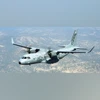 "Airbus C295")