Tuesday, January 06, 2026 | 02:53 AM ISTहिंदी में पढें
Business Standard
Notification Icon
userprofile IconSearch

Trump's outreach to Putin disrupts US-Ukraine policy and Nato ties

The key element of Mr Trump's deal appears to centre on veiled threats to withdraw US military aid to Ukraine to persuade Kyiv to cede to Russia territory
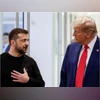
Donald Trump, Volodymr Zelenskyy
premium

Mr Trump has also decided to criticise Ukraine for the war, suggesting that Mr Putin’s aggression could have been forestalled by a deal

Business Standard Editorial Comment Mumbai

Listen to This Article

American President Donald Trump’s outreach to Russian President Vladimir Putin and a revival of his antagonism towards Europe (and specifically the North Atlantic Treaty Organization, or Nato) were expected in his second presidency. But the swiftness with which Mr Trump has flipped the script on Russia’s invasion of Ukraine on February 24, 2022, has left all the actors scrambling for a response. It is the strongest indication yet that the United States (US) President intends to radically recalibrate the relations with Europe, Nato, and Russia, upending the basis of a 75-year relationship. Excluding Ukrainian delegates from the meeting between senior members of the Trump and Putin administrations in Saudi Arabia to discuss ending the war against Ukraine is only one sign of a remarkable departure from US policy so far. Mr Trump has also decided to criticise Ukraine for the war, suggesting that Mr Putin’s aggression could have been forestalled by a deal. Since the broad contours of this “deal” do not appear to be in Ukraine’s interests, any peace plan acceptable to all parties, as Secretary of State Marco Rubio has promised, is unlikely. 
The key element of Mr Trump’s deal appears to centre on veiled threats to withdraw US military aid to Ukraine to persuade Kyiv to cede to Russia territory it has conquered and refrain from joining Nato (though its membership of the European Union hangs in the balance). Another strategy entails gaining access to Ukraine’s reserves of critical minerals, which the US currently imports from China. Mr Trump has suggested that the US be granted 50 per cent of Ukraine’s rare earth minerals as reimbursement for billions of dollars’ worth of weapons and other support. The complication here is that almost 40 per cent of these deposits are located in the eastern zone, which is under Russian occupation. Mr Putin could well offer these deposits to the US in return for a commitment by it not to restore Ukraine’s pre-2014 borders (Crimea, Donbas, and Luhansk) and to prevent the country from joining Nato. 
As talks continue in Riyadh and Ukrainian President Volodymyr Zelensky postpones his trip to the Saudi capital, Europe is struggling to put together a Plan B. France intends to convene another round of meetings among European allies — this time including Nato ally Canada and European countries not present at the first one on February 17. But the grim reality is that a Ukraine agenda that excludes the US is unworkable. The monetary value of US military donations, at $69 billion, is $13 billion more than the combined spending of the nine other major donors (as of December 2024). Should Nato take the extreme step of putting boots on the ground in Ukraine, as the British Prime Minister has offered, it would have about 1.5 million active military personnel at its disposal without the US, roughly the same as Russia. The US accounts for two-thirds of the Nato budget. But a line has been crossed; Mr Trump’s Putin partisanship signals a tacit tolerance for sovereign territorial violations. For Poland, the Baltics, and Scandinavia, several of which have signed up with Nato to parry Russian territorial threats, and Eurasian nations looking to Europe, the transatlantic security architecture could be facing its greatest threat since the Second World War.