


Ukraine-Russia war: Why India's mediatory moves may remain limited
With its incursion into Russian territory, Ukraine crossed a red line with respect to the terms on which the Western allies extended it aid, potentially altering the dynamics of the peace process
 "PM Modi Ukraine visit")
premium
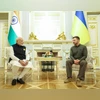
Prime Minister Narendra Modi held bilateral talks with Ukrainian President Volodymyr Zelenskyy at the Mariinskyi Palace on Friday. Image credit: @narendramodi (X)
Listen to This Article
As the first Indian head of government to visit Ukraine since diplomatic relations were established in 1992, Prime Minister Narendra Modi sought to demonstrate India’s strategic independence in the war between Russia and Ukraine by engaging with both warring parties. In the past, Indian PMs avoided former Warsaw-Pact countries out of respect for Indo-Russian ties. Visiting Poland and Ukraine has altered those equations. The optics of the visit, for which Mr Modi travelled to Ukraine from Poland by train, were designed to suggest that India had succeeded in inserting itself into the peace process as a credible interlocutor. Coming six weeks after Mr Modi travelled to Moscow, the Ukrainian visit was also seen as assuaging negative sentiments in the US administration.