


Will 2026 Census-based delimitation shrink South India's voice in LS?
With delimitation tied to the 2026 Census, southern states risk losing seats despite leading in population control and contributing heavily to the economy
 "delimitation 2026, census-based delimitation, delimitation in India, Lok Sabha seat distribution, south vs north political representation, one person one vote principle, constitutional amendment 84th, population-based seat allocation, political repre")
premium
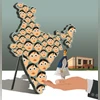
The counter-argument runs that democracy is based on the “one person, one vote” principle and, therefore, each Member of Parliament (MP) should represent equal number of people | Illustration: Binay Sinha
6 min read Last Updated : May 06 2025 | 10:39 PM IST
Listen to This Article
The 84th amendment to the Constitution binds the next delimitation exercise with the new Census. It is this link that has upset southern states. The amendment, made in 2002, froze the number of Parliament seats to the 1973 delimitation exercise, which was based on the Census of 1971. It says that the next delimitation exercise would be undertaken after 2026, based on the first Census after that year.
Southern states controlled their population much better than their northern counterparts, and as such, they fear loss of political representation if the new re-mapping of the Lok Sabha seats is linked to the Census. The counter-argument runs that democracy is based on the “one person, one vote” principle and, therefore, each Member of Parliament (MP) should represent equal number of people.
For the purpose of analysis, northern states are taken in political terms and not geographical context. As such, we have taken the most populous states in the region — Uttar Pradesh, Bihar, Madhya Pradesh, and Rajasthan. As Uttarakhand, Jharkhand, and Chhattisgarh were carved out of Uttar Pradesh, Bihar and Madhya Pradesh, respectively, as separate states, these were included among the northern states from 2001 onwards.
Similarly, Telangana, which was carved out of Andhra Pradesh, is included in southern states from 2011 for the purpose of national accounts data, such as gross domestic product (GDP) and per capita income, even though it was formed in 2014. Andhra Pradesh, Tamil Nadu, Kerala and Karnataka are the original southern states.
As many as 129 MP seats are there in southern states while their northern counterparts have 204 seats. This position has been there since the 1973 delimitation exercise.
Each MP, whether in southern or northern states, represented 1.04 million people in the 1973 delimitation exercise, with roughly the same number represented by a lawmaker at the all-India level.
However, as two more censuses were conducted in 2001 and 2011 after the one in 1971, representation of each MP in North India grew much higher than his/her southern counterpart. Based on population estimates by SBI Research for 2024, Business Standard analysis showed that each MP in North India represented 3.03 million people that year, much higher than 2.1 million by an MP in southern states.
In fact, representation of each MP in South India was lower than the national average of 2.6 million people at the all-India level in 2024.
In all probability, any Census in 2026 or after that would only lessen the representation of each MP in South India and raise it for his/her North Indian counterpart.
As such, if the delimitation exercise is based on population only, southern states would fare much worse than their northern counterparts.
Rajeev Gowda, a Congress national spokesperson, says a delimitation exercise based solely on population will diminish representation of South India.
"Historically also, Prime Ministers had never been from South India till P V Narasimha Rao became the head of the government in 1991," Gowda comments, giving historical context to the apprehensions of southern states.
He, however, clarifies that he was not voicing opinion against the “one person, one vote” principle while cautioning that population control by the southern states should not result in reduction of their political representation.
Anil K Sood, professor and co-founder of The Institute for Advanced Studies in Complex Choices, opines: "If we want policies that work for everyone, population should not be the basis for representation."
A state or a geographical region with small population or lower growth in population must have the same voice as a state or region with large population or higher population growth, he explains.
Sood points out that the problems that the southern states have to solve and the resources and policies that they need are very different from the states in the North.
"For example, the southern states must make greater investments in areas that help provide employment for highly educated and ambitious workforce and an aging population. They also need resources and policies that help them provide migrant populations from other states with the same quality of life as the local population," he elucidates.
On the other hand, he says the northern states must invest in providing higher quality education, and creating employment at scale for the youth with limited skills. "An ageing population is not a problem for poorer states in the North," he points out.
If one takes economic parameters, southern states are far ahead of their northern counterparts. For instance, southern states had a per capita income that was almost double that of their northern counterparts in 1971-72. By 2023-24, this has widened to almost 3.5 times.
The story is quite similar on other parameters too, be it size of the economy, contribution to central taxes, or bank advances.
Gowda says, "We have to look for other ways of balancing this out (population-based delimitation). It could be enhanced representation in the Rajya Sabha or enhanced fiscal allocations. Demand is also there for freezing the seats."
Hardeep Sachdeva, senior partner at law firm AZB & Partners, says that the delimitation debate is not just about arithmetic but is also about the architecture surrounding the ethos of cooperative federalism.
“If we want to preserve our unity amid diversity, representation must reward responsibility, not just reproduction,” he emphasizes.
Sachdeva suggests a balanced approach by keeping the Lok Sabha representation largely population-based but capping disproportionate losses or gains. He also favours Rajya Sabha reforms to enhance equal state representation.
Sood underlines that it is important that politicians avoid unnecessary conflicts on economic and social issues, particularly in today’s context where Indian politics is leading people to believe that the nation's diversity is a weakness.
"We need greater participation and resources at the local institutions of governance. We must increase the number of seats in legislative assemblies and other local governance institutions, as it is far more important to strengthen these institutions than worry about the number of MPs that we need from each state," he emphasises.
As such, he suggests the delimitation exercise for parliamentary constituencies be put on hold, and participation in local governance institutions and legislative assemblies be enhanced, something that will help eliminate avoidable conflicts.
Topics : census national politics State Budgets