Electric scooter companies are working on a plan to offer a low-priced slow charger under Rs 4,000 and absorb its cost within the mandatory ex-factory cap imposed by the government for availing of the FAME 2 subsidy. However, they will need three to four months to manufacture it and offer it with the electric vehicle (EV). The move is being considered after the Department of Heavy Industries asked companies to respond to complaints by a whistle-blower.
The whistle-blower had complained that electric scooter companies like Ather Energy, Ola Electric, and TVS were selling the charger at prices ranging from Rs 9,450 to over Rs 19,000 (for fast chargers) and billing it separately, instead of making it part of the ex-factory price of EVs. This was despite the fact that an electric scooter cannot be used without the charger.
Some electric scooter companies said that they had been responding to consumer demand, as many people had two electric scooters of the same brand and did not want to buy another charger. Hence, it was being offered separately. But the whistle-blower pointed out that checks with dealers had revealed that it was mandatory to buy the charger along with the scooter in every case.
The problem for e-scooter makers is that if the charger price is included in the ex-factory price, these models would cost more than the maximum price allowed under the subsidy scheme.
To avail of the FAME 2 subsidy, the maximum ex-factory price needs to be no more than Rs 1,50,000. However, if the price of a charger and software upgrade are added, the ex-factory price of electric scooters would shoot up to around Rs 1.53-1.95 lakh.
A senior executive of an electric scooter company says: “From a legal standpoint, we are on a strong wicket, because under the homologation rules for electric scooters, the charger is not included. So why should it be included in the ex-factory price?”
Homologation refers to certification that the vehicle parts are roadworthy.
He says that talks are on between the government on the contentious issue, but if the latter insists on it, the company is looking at providing a slow charger as a default included in the scooter’s ex-factory price. However, it will take at least three to four months to manufacture a new charger. Consumers will have the option of buying the fast charger at an extra cost.
A top executive at another electric scooter company says that while offering a basic charger within the ex-factory price is a possibility, the customer experience could get compromised. “Offering a cheaper basic charger is a solution. But it will compromise customer experience and we have tried to impress that upon the government. So talks are on”.
Those who have complained over the issue say there was a strong logic behind the cap of Rs 1.5 lakh ex-factory price. It was kept intact even in the FAME 2 revision done on 11 June, 2021, so that the on-road price without subsidy does not go beyond Rs 1.85 lakh or so. Such an electric two-wheeler can be subsidised up to Rs 60,000 to bring down the on-road price to around Rs 1.25 lakh, to bring it within the reach of most customers. There is a similar FAME 2 cap of Rs 15 lakh on electric passenger cars, too.

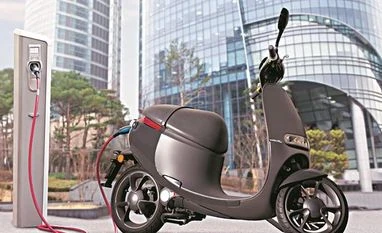 "E-scooter companies likely to offer cheap chargers to meet FAME norms")












