
India's passenger vehicle exports up 2% in Q2, Maruti Suzuki leads: SIAM
Passenger vehicle exports from India increased 2 in the second quarter, with Maruti Suzuki India leading the segment with dispatches of over 131,000 units
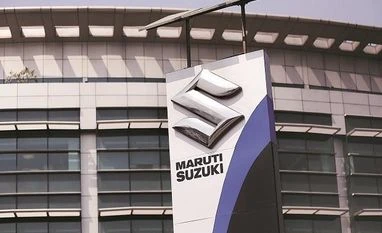 "India's passenger vehicle exports up 2% in Q2, Maruti Suzuki leads: SIAM")
Explore Business Standard
Passenger vehicle exports from India increased 2 in the second quarter, with Maruti Suzuki India leading the segment with dispatches of over 131,000 units
Passenger vehicle exports from India increased 2 per cent in the second quarter, with Maruti Suzuki India leading the segment with dispatches of over 1.31 lakh units, as per the latest data by Society of Indian Automobile Manufacturers.
The total passenger vehicle (PV) exports stood at 1,60,590 units in the July-September period as compared with 1,57,551units in the same period a year ago.
Passenger car shipments saw a 5 per cent dip at 97,300 units while utility vehicle exports rose 16 per cent at 63,016 units during the period under review, data by the Society of Indian Automobile Manufacturers (SIAM) showed.
Export of vans declined to 274 units in the September quarter as compared with 297 units in the same period last fiscal year.
Maruti Suzuki India (MSI) led the segment during the period, followed by Hyundai Motor India and Kia India at the second and third positions, respectively.
MSI, the country's largest carmaker, exported 1,31,070 PVs in the period under review, as compared with 1,03,622 units in the same period of the previous fiscal year.
MSI's top PV export markets include Latin America, ASEAN, Africa, the Middle East and neighbouring regions, while its top five export models comprise Baleno, Dzire, Swift, S-Presso and Brezza.
Hyundai Motor India's foreign dispatches stood at 74,072 units during July-September period, up 11 per cent from 66,994 units in the year-ago period.
Similarly, Kia India exported 44,564 units across global markets in the period under review as compared with 23,213 units in the last fiscal year.
Nissan Motor India shipped 25,813 units in the period under review as against 18,614 units in the year-ago period. Renault exported 18,614 units while Honda Cars India shipped 13,326 units in the July-September quarter.
Volkswagen India exported 9,641 units in the July-September period.
In September quarter overall automobile exports, including commercial vehicles and two- and three-wheelers, came down to 12,54,560 units from 14,10,711 units in the year ago period.
SIAM President Vinod Aggarwal said that with the US dollar gaining strength vis a vis local currencies, various countries in Asia and Latin America have been forced to bring in import restrictions to safeguard foreign exchange.
(Only the headline and picture of this report may have been reworked by the Business Standard staff; the rest of the content is auto-generated from a syndicated feed.)
First Published: Oct 16 2022 | 11:31 AM IST

