Maruti wants sub-brand Nexa to contribute a larger share of the top line

Historically, Maruti's biggest advantage has been understanding what customers want
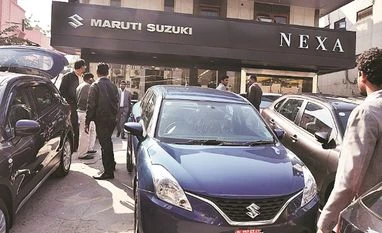
NEXA, Maruti Suzuki
But Maruti plodded on with its blueprint to create premium cars that needed to be seen in the context of Maruti
Pavan Lall Mumbai
5 min read Last Updated : Mar 14 2022 | 6:04 AM IST

Don't want to miss the best from Business Standard?

Maruti, India’s largest car-maker, initially built its reputation as a mass-market manufacturer. But its premium brand, which falls under the sub-brand Nexa, established in July 2015, has sold well over a million cars and contributes almost 20 per cent of the total Maruti Suzuki passenger vehicle sales. If the sub-brand were considered a company by itself, it would have figured among the top five in terms of market share last year. In 2020-2021, the brand reported 254,000 units in car sales.

Driving Nexa’s trajectory has been the Baleno hatchback, which was recently launched in its second generation. Maruti invested Rs 1,100-plus crore in this new model, which has consistently been amongst the top five cars sold in India since it was first launched and one of the fastest to cross the million-car mark. Maruti’s million-car club has also included cars such as the Swift, the Omni (Van), the Alto, the Wagon R, the 800 and the Swift Dzire.

Historically, Maruti’s biggest advantage has been understanding what customers want. Back in the Eighties, when domestic competition was restricted to cars with dated technology, customer wants were easy to figure out. Low cost, fuel efficiency and easy maintenance were key qualities that customers looked for. Then the markets opened up and the likes of Hyundai, Honda, Toyota and Volkswagen rolled in, followed more recently by Kia. In earlier interactions, Kenichi Ayukawa, Managing Director and CEO, agreed that it was a matter of time before serious competition tested its dominance but maintained that Maruti’s killer app was the ability to keep its ear to the ground and its finger on the pulse of what customers wanted. “Nexa has helped us raise the benchmark of the car-buying experience and convince customers, who were otherwise still unsure, to purchase from Maruti Suzuki,” he said.

While the Baleno has been drumming up volumes, Maruti is clear about what it has to do to keep volumes growing. “We plan to reach out further to newer segments to meet their aspirations as well,” Ayukawa said.

When Nexa first entered the market, there was scepticism since Maruti had tinkered with premium and luxury cars and had been unable to make it work for them. That’s because it takes a long time for the luxury badges that are manufactured by mainstay brands to be accepted by their customers. For example, with Toyota there is Lexus, with Honda there is Acura and with Nissan there is Infinity. All serve as top-end premium car brands that cater to an entirely different set of customers. The one difference is that they are not just sold through different outlets and sales channels but also badged entirely differently, which is not the case with Maruti’s Nexa that still heralds the S for Suzuki on its car grilles and front ends.

Initially, Maruti imported a few cars as test cases for its luxury foray. For example, the premium SUV, the imported Grand Vitara, was launched in India circa 2008, and a few years later, the fully imported Kizashi sedan. Both were eventually withdrawn. Part of the problem was that both cars were priced around Rs 20 lakh which was considered too high.

But Maruti plodded on with its blueprint to create premium cars that needed to be seen in the context of Maruti. The early experience taught it that it should never get into cars that would cost Rs 30 lakh to Rs 40 lakh and compete with Mercedes-Benz and BMW. Instead, it would zero in on the price band between Rs 10 lakh and Rs 20 lakh. So, Nexa cars are priced between Rs 7.6 lakh for the Ignis and Rs 12.77 lakh for the S-Cross.

Seven years after it announced Nexa, there’s no mistaking the seriousness with which Maruti wants the segment to grow. Shashank Srivastava, senior executive director, sales and marketing, said he expects the current 20 per cent of sales for which Nexa accounts to grow significantly, given customer trends. So more new models, including a sports utility vehicle, are being planned for the Nexa channel, but the company declined to get into specifics.

The stark insight that the company has gained here is that the customers for the two brands are quite different. Nexa buyers are slightly older, touching an average of 38.9 years and have an income that is around 45 per cent higher, and typically come from big cities and towns. That is why Nexa isn’t even featured on Maruti Suzuki’s website; instead, it has its own page on Nexaexperience.com. “If there is a task at hand it is to continually upgrade the retail experience for the Nexa products,” Srivastava said.

But as the Indian automotive market scales up, the challenges for the country’s largest car-maker aren’t going to get easier. “As market leader, Maruti Suzuki has had to make sure that it has products in the relatively ‘premium’ and aspirational segments that are different from its legacy image,” said Suraj Ghosh, Director, S&P Global Mobility.

It did so, he added, by creating a new sales channel, a sub-brand in a sense, to differentiate from its more basic or entry-level cars. “The overall journey of the customer was redesigned to provide a wholesome and premium sales experience,” Ghosh said. Of course, as he pointed out, whether Nexa can elevate Maruti Suzuki cars to be perceived as premium is an exercise that will be a work in progress. But that could happen in the long term.

One subscription. Two world-class reads.

Already subscribed? Log in

Subscribe to read the full story →
*Subscribe to Business Standard digital and get complimentary access to The New York Times

Smart Quarterly

₹900

3 Months

₹300/Month

SAVE 25%

Smart Essential

₹2,700

1 Year

₹225/Month

SAVE 46%
*Complimentary New York Times access for the 2nd year will be given after 12 months

Super Saver

₹3,900

2 Years

₹162/Month

Subscribe

Renews automatically, cancel anytime

Here’s what’s included in our digital subscription plans

Exclusive premium stories online

  • Over 30 premium stories daily, handpicked by our editors

Complimentary Access to The New York Times

  • News, Games, Cooking, Audio, Wirecutter & The Athletic

Business Standard Epaper

  • Digital replica of our daily newspaper — with options to read, save, and share

Curated Newsletters

  • Insights on markets, finance, politics, tech, and more delivered to your inbox

Market Analysis & Investment Insights

  • In-depth market analysis & insights with access to The Smart Investor

Archives

  • Repository of articles and publications dating back to 1997

Ad-free Reading

  • Uninterrupted reading experience with no advertisements

Seamless Access Across All Devices

  • Access Business Standard across devices — mobile, tablet, or PC, via web or app

Topics :Maruti SuzukiMarutipremium car segment

Next Story


