As the union budget 2017 is about to be unfold, Indian industries have geared up to seek Government support to create a favourable business environment with adequate financial support for their respective sectors. Here, the electric vehicle (EV) industry, has also been advocating a few demands that can give it a strong foothold in the Indian market and later, on the exports front. The wish list has expectations for bringing our nation closer to its sustainable and green mobility goals.
The electric vehicles industry has demanded zero percent VAT, concessions on tax, easy credit, loans, infrastructure and subsidies for battery replacements. There are few important areas, which require immediate attention. The government support would help the industry to grow and attain the NEMMP 2020 target - an ambitious initiative undertaken by the Government of India that has the potential to bring about a transformational paradigm shift in the automotive and transportation industry in the country. This is a culmination of a comprehensive collaborative planning for promotion of hybrid and electric mobility in India through a combination of policies aimed at gradually ensuring a vehicle population of about 6-7 million electric/hybrid vehicles in India by the year 2020. To achieve the NEMMP 2020 target, the industry aims to hit with 1 million EVs on Indian roads, in 2017.
The long term aspiration is to become a 100percent EV nation by 2030, the hand-in-hand support from the government is significant to take the EV industry to the desired next level. Here are eight major demands from the ensuing Union Budget 2017.
A special treatment for electric vehicles via special exemption from GST different from the auto industry, will help the industry flourish. SMEV is already working with almost all the state governments to either exempt electric vehicles from VAT or reduce it to 5 percent. GST will provide the uniform tax across India and will be simplifying the procedure making it easy for the business holdings to comply with the tax norms.
Electric vehicles should be exempted from 6 percent excise duty which is also levied on polluting SUVs, mid-sized vehicles and MPVs. Basic excise duty is charged at 6 percent on assessable value and there is 2 percent E cess and 1 percent HE cess. For the patronage of the electric vehicles, it’s essential that overall price of the vehicles comes down for the end users.
The automobile cess has to be done away with, for it creates a lot of processing hurdles in terms of time and documentation. The 0.125 percent of automobile cess is levied on clearance of vehicles, presently. It will go a long run in implementing the ease of doing business for the EV Industry.
Reduced interest rate and prime lending by banks
The upcoming budget must consider lowering the interest rate for electric vehicle loan for buyers and reducing the prime lending rate for electric vehicle industry at easy interest rate for setting up factories, to enable mass manufacturing. The SMEs and MSMEs, which can usher the mass manufacturing, need to be encouraged via the easy interest rate ensuring availability of capital for manufacturing industry.
Subsidies for building charging infrastructure
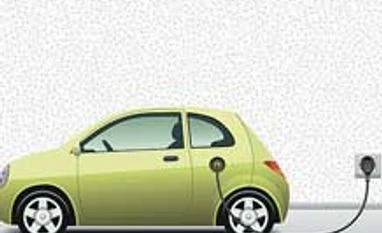
Adequate charging infrastructure is required to enable the absorption of electric mobility paradigm in India. The budget must address the development of charging infrastructure and provide subsidy of up to 25 percent of the cost of the charges. The charging infrastructure will install faith in the consumer, leading to wider adoption of EVs.
Subsidy on the purchase of second battery
Sohinder Gill, director (corporate affairs), SMEV
The government must announce at least 35 percent subsidy on replacement of lithium ion battery packs for EVs for incentivising faster adoption and larger lifespan, especially for electric two wheelers. The further subsidy will motivate the consumer of EV industry to buy more as the maintaining and running cost will get reduced.
Anti- dumping duty on import of Chinese e-rickshaw
The domestic electric vehicles manufacturers have demanded the imposing of anti-dumping duty on the import of substandard and low- grade e-rickshaw from China to protect the indigenous industry. The low grade e-rickshaw increases risk for commuters’ life and it becomes hazardous after losing its utility, for its constituents are made of inferior materials.
Long-term policy support- FAME
The industry advocates for a minimum five-year extension of the FAME scheme of the Government of India for ensuring the stability and continuity in terms of policy support for the EV industry. FAME has been successfully helping industry and its support is critical for long terms realization of electric vehicle potential in India.
To reduce India's fuel import dependency, as well as to tackle the menace of vehicular pollution in our cities, the government has to be committed to galvanise the eco-system for e-vehicles in India.
Hopefully, the forthcoming budget will create a favourable and stable policy environment to achieve India’s electric vehicle target and revive industry with a long-term extension in the FAME policy (ending this financial year).
The EV industry is currently moving at a snail’s pace and is far from the target of 6-7 million electric/hybrid vehicles in India by the year 2020 as in the National Electric Mobility Mission Plan 2020. It will gather the desired momentum with support from the government, in the form of subsidies, tax incentives and infrastructure development.
To meet the commitment made under the Paris Agreement, India has to implement an array of standards in its energy production and emission norms. India is the world’s third largest carbon emitter, accounting for 4.1 percent of emissions. So, clearly there is a need to popularise the mass adoption of green transportation means. Thrust on sustainable green transportation mode along with its network will be panacea for reducing the emissions and reducing the import bill.
Urban transport in India has to address numerous challenges, viz, deteriorating air quality, rising greenhouse gas (GHG) emissions and mounting energy security risks. And here, electric vehicles can offer alternate mobility options to redress these adverse impacts.
_______________________________________________________________________________________________
Sohinder Gill is the director (corporate affairs) of Society of Manufacturers of Electric Vehicles (SMEV)

 "Govt must galvanise the eco-system for electric vehicles in India")












 Connect with us on WhatsApp