FINDING MY WAY Author: Venkat Raman Singh Shyam and S Anand
Publisher: Juggernaut
Pages: 192
Price: Rs 1,499
A reviewer has compared this book to being on a flying carpet that transports us to another time, age and space through its evocative drawings and stories. The autobiography of Gond artist Venkat Raman Singh Shyam, co-written with poet-publisher S Anand,
Finding My Way blends poetry, narrative and painting into a thought-provoking discourse on art in an unequal world.
Finding My Way is a story of survival, both physical and artistic. In his early years, Shyam painted signboards, drove rickshaws and peddled his art wherever he could. He lovingly recollects his two mentors, J S Swaminathan, and his uncle, the celebrated artist Jangarh Shyam, who brought Gond art out of the forests into the galleries of the world. Ironically, it was not until Jangarh Shyam's early death in Japan that his nephew resolved to be to be true to his art and art alone.
Finding some success and recognition in his middle years, Shyam travelled across the world to exhibit and paint. This section of the book, aptly titled "Songs of the World", is an engaging account of an alien world perceived by a forest-dwelling tribal. Seen through his eyes, readers might find that even the familiar becomes unfamiliar-he describes an escalator in Barcelona, for instance, as a snake that endlessly eats itself.
Shyam making a selfie with Rembrandt. Rembrandt is rendered in Gond style and Shyam renders himself in Rembrandt’s style
It was during this time that Shyam was exposed to the works of Dali, Picasso and the European masters. An interesting work in the book illustrates this period of his life -Shyam's "selfie" with Rembrandt's self-portrait painted in, what he refers to as, Jangarh-style. This international exposure also brought home the fact that even after all these years his folk art remains the lesser art -or, worse, a "craft".
Jangarh Shyam's painting sold for Rs 24.5 lakh at Sotheby's ; two years later, in 2013, V S Gaitonde's artwork fetched Rs 6.3 crore. The authors regret the fact that the National Gallery of Modern Art in New Delhi does not have a single piece of Adivasi art, as much as they rue the trend of upcoming Gond artists forsaking their traditional subjects to paint mainstream Hindu gods and goddesses just to find easy buyers. They're right, of course, in saying that when commodified, art ceases to be true. But as Shyam has painfully experienced in his own life - if it does not sell at all, art can be a cruel mistress.
To many, Venkat Raman Singh Shyam's piquant illustrations (for example, he always draws himself with a tail) would be the book's highlight. This view would, however, do an injustice to
Finding My Way. Through a combination of the written and painted word, it offers a unique insight into the world of the Gond. It's a world in which trees are sacred -compared to the cities where, as he poetically puts it, trees die so that we can breathe - and where rivers have life and consciousness of their own-very different from the place where politicians blithely talk of interlinking rivers. To the Gond people, this would be an anathema. "It is like infusing all blood types into all bodies. It is mass murder." The relationship between the writer Anand and the artist Shyam is also described in a typically Gond fashion: "We found ourselves in a Clock where the two hands moved in different directions, and sometimes met each other."
The Gond perspective sharpens as Shyam and Anand rewrite the chapter of the Mahabharata in which Arjun makes the Dandaka forest "liveable" for his exiled family. The mainstream Hindu hero becomes the cruel Other (not unlike modern-day politicians, timber traders and mining companies) who invades tribal land, ruthlessly slashes and burns sacred forests and kills all those who stand in his way. It is not hard to see where the authors are going with this allegory. Indeed, what makes this book so interesting is that the authors are quite unafraid of being political.
The opener for the section titled ‘Songs of the World
Finding My Way is a hard book to put down even for the most blase of readers, although some might wish it had been more tightly edited, with fewer disjointed digressions from autobiographical anecdotes to sometimes incomprehensible Gond philosophy to Kabir's poetry (albeit beautifully translated). Adding to the lack of temporal progression is the fact that the pages are not numbered. It is almost as if a reader can randomly open the book on any page, and read on. It must be said, though that, through this hodgepodge, the honesty and simplicity of the artist and the Gond people comes through beautifully.
As a visual autobiography,
Finding My Way offers a glimpse into the unseen lives of the Gond people, shedding light on the plight of forest dwellers and the price they pay for development and commerce. But what really shines throughout the book is a celebration of different ways of seeing - and the author/artist's quiet confidence that India's folk artists have stories worth telling, songs worth listening to, and canvases that need to be painted for a wider audience.

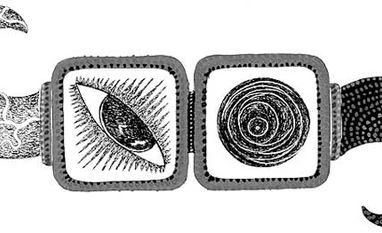 "An Adivasi's ways of seeing")


 Connect with us on WhatsApp