Dilip Kumar: The sole supernova in Galaxy Bollywood

Yusuf Khan from Peshawar, aka Dilip Kumar, was completely believable in a wide range of roles in a span of 12 years at the height of his career covering 62 films in nearly 50 years
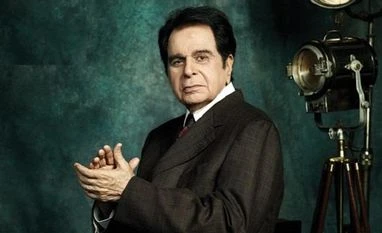
Dilip Kumar, Bollywood
Shreekant Sambrani
5 min read Last Updated : Jul 08 2021 | 9:35 PM IST
From the time films began to be made in 1900, stars the world over assiduously cultivated distinctive images. In the Golden Age of Hindi cinema Raj Kapoor was always a Chaplinesque innocent. And Dev Anand was ever the happy-go-lucky urban imp. But there was one outlier. Picture these vignettes: 

  • A debonair young man at a piano sings “aaj kisi ki haar hui hai, aaj kisi ki jeet” (somebody lost today, somebody won). He has just learnt that the heiress he loved is actually long enamoured of someone else.
  • The heir to the Mughal throne runs a feather along the face of an incredibly beautiful courtesan he passionately loves but cannot marry. Only the court musician’s aalaps are heard in the background.
  • A farm labourer cavorts with his friends, singing “nain lad jaihein” until his fresh-faced beloved appears. He ends up a dacoit trying to save her from the clutches of the evil moneylender, only to die at the hands of his policeman brother.
  • A scion of landed gentry tells a Calcutta courtesan who loves and cares for him, “kaun kambakht bardasht karne ke liye peeta hai” (I want to drink beyond tolerance). However much he drinks, he says, a sliver of consciousness reminds him of the pain (of separation from his childhood sweetheart, now married to someone else).
 
Yusuf Khan from Peshawar, aka Dilip Kumar, was completely believable in all these roles – arguably his best – in Andaz (1949), Mughal-e-Azam (1960) Ganga Jumna (1961), and Devdas (1955), in a span of 12 years at the height of his career covering 62 films in nearly 50 years.
 
He was dubbed the tragedy king, but that was only a part of his repertoire. He was more than adequate as a swashbuckling hero (Aan, Azaad, Kohinoor), an upstanding tongawalla fighting greedy contractors (Naya Daur), a Roman (Yahudi), simpering/dare-devil twins (Ram Aur Shyam), a martinet of a father (Shakti) and a patriarch (Kranti, Saudagar) in some of his famous films. But his Gothic portrayals of conflicted characters in lesser films – Heathcliff in Emily Bronte’s Wuthering Heights (twice, in Arzoo and Hulchal), Edward Rochester in Charlotte Bronte’s Jane Eyre (Sangdil) and Victor Stowell in Hall Caine’s The Master of Man (Amar) – testify to his range as well as courage in playing characters with deep negative traits in an age when romance alone was king.
 
Legend credits Thespis the Greek poet of sixth century BC to be the first actor, who actually became a different character on stage at a time when theatre entirely comprised chorus performances. Aristotle called these new dramas tragedies. No one deserves the title thespian, the adjectival or noun form of Thespis, than Dilip Kumar.

ALSO READ: Remembering Dilip Kumar, the legendary actor, who has bowed out at 98
 
Born in 1922 in Peshawar, Yusuf came to Bombay with his well-off fruit-trader family as a school-boy. His good looks, well-bred manners and soft speech landed him a contract in 1942 with Devika Rani’s Bombay Talkies on the look-out for a new hero. Without any training in acting, he was thrust into the lead in Jwar Bhata (1944). It did not do too well and Dilip attracted little attention.
 
No quitter, he studied film-making in all its aspects, sought advice from his many directors, and Ashok Kumar, his senior at the studio. A natural actor himself, Ashok Kumar told Dilip to be himself in front of the camera, possibly the best career-shaping advice he received. He avidly read classic novels which reflected in his choice of roles. He watched the latest Hollywood fare, with stars such as Paul Muni, Spenser Tracy, Henry Fonda, James Stewart, among others. All by himself, he realised that he had to explore his own feelings and experiences while portraying the screen character, the essence of the Stanislavski School of “method acting.”
 
Lord Meghnad Desai terms Dilip Kumar as the star of the Nehruvian era of social activism, but most of his memorable characters were from the middle or upper classes, angst-ridden and unable to cope with their existential dilemmas. Their future was predetermined by their birth, denying free will. Unable to cope with the conflict, they went down the path of self-destruction, often aided by demon brew.
 
Saratchandra Chattopadhyay’s Devdas was the very embodiment of this conflicted persona. Dilip Kumar was born to play the role in the Bimal Roy film, the best among the numerous versions. He brought the right mix of self-loathing and hopelessness to his understanding of the character.
 
Even the dacoit Gunga of Gunga Jumna is an extrapolation of this archetype, albeit from a different milieu. Dilip scoured the Badlands of Uttar Pradesh to get the ambience just right, including the Purbi dialect, and worked on every frame of the film, even though Nitin Bose, his early mentor, was the titular director.
 
That was the essence of Dilip Sahab, the sole supernova in the Galaxy Bollywood.
 
(This is an abridged version of the writer’s The self-taught actor, which appeared in Business Standard on October 25, 2014)

One subscription. Two world-class reads.

Already subscribed? Log in

Subscribe to read the full story →
*Subscribe to Business Standard digital and get complimentary access to The New York Times

Smart Quarterly

₹900

3 Months

₹300/Month

SAVE 25%

Smart Essential

₹2,700

1 Year

₹225/Month

SAVE 46%
*Complimentary New York Times access for the 2nd year will be given after 12 months

Super Saver

₹3,900

2 Years

₹162/Month

Subscribe

Renews automatically, cancel anytime

Here’s what’s included in our digital subscription plans

Exclusive premium stories online

  • Over 30 premium stories daily, handpicked by our editors

Complimentary Access to The New York Times

  • News, Games, Cooking, Audio, Wirecutter & The Athletic

Business Standard Epaper

  • Digital replica of our daily newspaper — with options to read, save, and share

Curated Newsletters

  • Insights on markets, finance, politics, tech, and more delivered to your inbox

Market Analysis & Investment Insights

  • In-depth market analysis & insights with access to The Smart Investor

Archives

  • Repository of articles and publications dating back to 1997

Ad-free Reading

  • Uninterrupted reading experience with no advertisements

Seamless Access Across All Devices

  • Access Business Standard across devices — mobile, tablet, or PC, via web or app

Topics :Dilip KumarBollywoodObituaryCinemaHindi cinematheatre

Next Story



