As India marks the first anniversary of the dreadful nationwide lockdown imposed on March 24, 2020, it is time to reflect on what has happened over the last year. The failure of public policy that turned the Covid -19 pandemic into a humanitarian crisis needs to be examined carefully. The experiences of people who have been pushed to the margins must be acknowledged, even if justice seems cut off from the reality of today’s India.
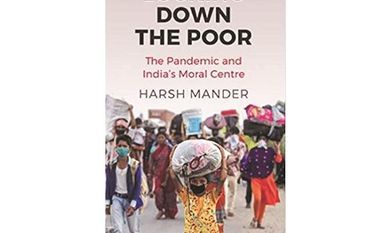
“The horror, torment and indignity of hunger, even in a pandemic, even during a lockdown, are entirely preventable. To save its people from this preventable suffering is the most elementary duty of the state. But at a time of one of the gravest crises in the country’s history, the Indian state has been adrift. Bereft of vision, administrative capacity and public compassion,” writes Harsh Mander in his new book Locking Down the Poor.
The author is well positioned to comment on this subject. He is the Director of the Centre for Equity Studies, a research organisation based in New Delhi. He has also served as Special Commissioner to the Supreme Court of India in the Right to Food Campaign. In addition, he is a human rights activist associated with Karwan-e-Mohabbat, a people’s campaign that provides legal, social and livelihood support to survivors of hate crimes.
The book reads like a scathing indictment of state cruelty towards migrant workers who earn their wages through manual labour in an informal sector that offers no economic security or healthcare support. Mr Mander does not mince words. He calls out Prime Minister Narendra Modi for giving over 1.3 billion Indians less than four hours’ notice before he announced “the world’s longest and most stringent lockdown, with the smallest relief package.”
Karwan-e-Mohabbat was among the many citizens’ initiatives involved in providing food supplies and dry rations to communities abandoned by the central and state governments. Mr Mander draws upon his own experiences from the field, and also pulls together data from surveys, news reports and academic research.
While taking stock of the economic hardships caused by the lockdown, he quotes from feminist economist Ashwini Deshpande’s work. Mr Mander writes, “For Dalits…Deshpande estimates, job losses have been three times higher than for the general caste worker, because people of these advantaged castes tend to have higher access to education and therefore to relatively more secure jobs in the formal economy which has been less drastically hit.” Dr Deshpande indicates that, for Dalits, the choice is often between unemployment and jobs that put them at the risk of disease and infection.
This book also highlights the distress faced by the elderly and the disabled who were unable to access food distributed by volunteers, Muslims who were falsely accused for being carriers of disease, children who lost access to nutritious meals when schools were shut down, and women who experienced domestic violence with greater frequency when they could not step outside their homes. The lockdown had a serious impact on people’s mental health.
Mr Mander employs a gender lens to show how women’s employment was affected by the lockdown, and how single male migrants had to negotiate a precarious existence. It does not spare much thought, however, for India’s transgender citizens who were badly hit by the lockdown because begging and sex work — the two main sources of livelihood available to them — could not be pursued. They had to depend on the rare kindness of strangers.

 "Lockdown taught the poor atmanirbharta")












 Connect with us on WhatsApp