Muslim politics in the age of Hindutva

Hilal Ahmed asks why Muslims have remained silent in the face of Hindutva provocations
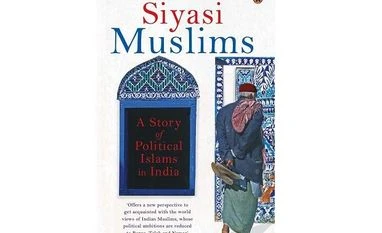
Cover of Siyasi Muslims: A story of political islam in India
Talmiz Ahmad
5 min read Last Updated : Aug 06 2019 | 12:43 AM IST
At a time when the political order in India seems obsessed with its Muslims, this book is a significant attempt at correcting the myths, misrepresentations and outright falsehoods that surround the national Muslim discourse.

Muslims are widely viewed as an undifferentiated monolithic collective, defined entirely by their faith, interested only in “Muslim” issues, and having a very doubtful commitment to the national interest.

Each of these perceptions is wrong.

Muslims number over 180 million in India, about 14 per cent of the population. They differ widely in terms of caste, class and region, and share the same concerns and anxieties relating to poverty, unemployment and education as their compatriots do. They are not more religious than other Indians and have little interest in the details of Shariat, the law of their faith that is believed to suffuse their outlook and daily life.

In the face of these realities, why are misperceptions about the community so pervasive? Their origins lie in the views and actions of British administrators and commentators at home in the 19th century who saw India as a region made up of diverse peoples, chief among which were two homogenous, collective groups called “Hindus”, the majority, and “Muslims”, the largest minority. This approach gave little consideration to pervasive local practices and diversities or cross-communal interactions that had shaped the multi-chrome tapestry of India’s composite culture over several centuries.

Whatever their shortcomings, these British writings influenced the self-perception of Indians: The sages sought to revive their faith on modern lines; the reformers responded to British critiques by advocating wide-ranging social reform, and the political activists agitated for a British-style democratic order.

Partition has, however, left behind two mutually exclusive ideas of India — one, accommodative, inclusive and secular; the other founded on the majority population’s identity as “Hindu”. The competition between these two visions, muted in earlier times, is now central to the national political scenario.

The ruling Bharatiya Janata Party (BJP) and the head of its family, the RSS, today affirm Hindutva as their informing ideology. Hilal Ahmed notes how difficult it has been for its votaries to understand it, explain it, or even to accept it as their guiding principle. Savarkar, who coined the term in 1923, described it in terms of the cultural affinity that conjoined all Hindus, and excluded those of other faiths. Golwarkar, however, rejected it in favour of “Bharatiyakarn (Indianisation)”.

It was accepted by the RSS as its ideology only in 1998. However, the BJP’s constitution does not include Hindutva, but instead accepts “Integral Humanism” as its party philosophy, which is the concept of “nationalism, democracy, and the Gandhian approach to socio-economic issues” that was expounded by party president Deen Dayal Upadhyaya in the 1960s.

But whatever the convoluted words proffered by Sangh Parivar stalwarts, their definition invariably “revolves around Muslims” – the Muslim as the collective, alien “Other” who, in their view, should become part of the national mainstream and prove his loyalty to his Hindu ancestry and to India.

Hilal Ahmed explains that Hindutva needs the Muslim for two reasons: One, to always keep alive the vision of the source of Hindu defeat and humiliation, and, two, to camouflage the ambivalence (and possibly the shallowness) of its own ideological moorings. Both these have resulted in promoting political mobilisation of Hindus across caste and region, with references to “vote banks”, “appeasement” and “good” versus “bad” Muslims.

On the basis of actual polling, Hilal Ahmed provides some much-needed facts that fly in the face of Hindutva obsessions. In regard to religiosity, 29 per cent Muslims and 30 per cent Hindus described themselves as “very religious”, while 57 per cent Muslims and 59 per cent Hindus saw themselves as “somewhat religious”. On Babri Masjid, 40 per cent Muslims and 43 per cent Hindus favour settlement through the Supreme Court.

In May 2018, 63 per cent Muslims felt the country was not going in the right direction; they were joined by 41 per cent Hindus, 58 per cent Sikhs and 61 per cent Christians. Again, 63 per cent Muslims trust public institutions, the same as their Hindu brethren, while Muslim participation in elections, at 59 per cent in 2014, compares well with the national average of 66 per cent.

Hilal Ahmed asks why Muslims have remained silent in the face of Hindutva provocations. He suggests two answers: One, on some issues, such as beef consumption, Muslims are not particularly agitated; this is perhaps what has impelled recourse to lynching by Hindutva cohorts to keep cow politics vibrant. Two, the author suggests that on matters of national policies, where the Modi government can be found wanting, Muslim silence merely reflects the pervasive national indifference and inertness.

Muslims, like all other communities in the country, are concerned about issues of national development and personal betterment rather than religious identity, and it is here that alternative initiatives in terms of ideas and activism are required from the political class to respond to Hindutva assertions. This is the principal challenge the nation faces today.

Siyasi Muslims: A Story of Political Islams in India
Hilal Ahmed
Penguin/ Viking, 2019
Pages: 240; Price: Rs 599
The reviewer is a former diplomat

One subscription. Two world-class reads.

Already subscribed? Log in

Subscribe to read the full story →
*Subscribe to Business Standard digital and get complimentary access to The New York Times

Smart Quarterly

₹900

3 Months

₹300/Month

SAVE 25%

Smart Essential

₹2,700

1 Year

₹225/Month

SAVE 46%
*Complimentary New York Times access for the 2nd year will be given after 12 months

Super Saver

₹3,900

2 Years

₹162/Month

Subscribe

Renews automatically, cancel anytime

Here’s what’s included in our digital subscription plans

Exclusive premium stories online

  • Over 30 premium stories daily, handpicked by our editors

Complimentary Access to The New York Times

  • News, Games, Cooking, Audio, Wirecutter & The Athletic

Business Standard Epaper

  • Digital replica of our daily newspaper — with options to read, save, and share

Curated Newsletters

  • Insights on markets, finance, politics, tech, and more delivered to your inbox

Market Analysis & Investment Insights

  • In-depth market analysis & insights with access to The Smart Investor

Archives

  • Repository of articles and publications dating back to 1997

Ad-free Reading

  • Uninterrupted reading experience with no advertisements

Seamless Access Across All Devices

  • Access Business Standard across devices — mobile, tablet, or PC, via web or app

Topics :BOOK REVIEW

Next Story



