The crop shortfall is somewhat intriguing since during the sowing months of March and April, the weather in West Bengal, the principal source of jute for making sacking bags, was quite favourable. According to the Indian Jute Balers Association (JBA) Secretary General SP Bakshi, “The growers frustrated by selling jute at low prices last season moved lands to other crops such as oilseeds and vegetables. The fibre quality depends much on what seeds are made available to them and availability of water for retting jute. There have been problems this year on these two counts.” Against last year’s 653,740 hectares under jute, the crop is grown only on 494,150 hectares in 2018-19. If there is a setback in crop in West Bengal, it cannot be otherwise in jute growing centres in Bangladesh where the quality too is down.


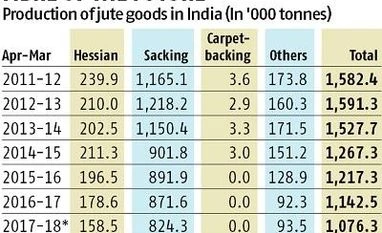 "A few jute firms are spinning a modern yarn, but shortages may be a hurdle")









