Central Bank to raise Rs 5,000 cr this fiscal to meet Basel III norms

Lender plans rights issue, FPO as part of fund raising exercise; says it will be requiring capital to meet prescribed capital adequacy ratio on ongoing basis
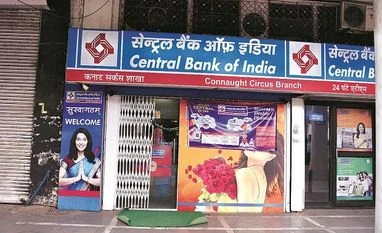
Central Bank to raise Rs 5,000 cr this fiscal to meet Basel III norms
Press Trust of India New Delhi
3 min read Last Updated : Jun 10 2019 | 2:31 AM IST
Central Bank of India (CBI) is planning to raise up to Rs 5,000 crore in the current fiscal through various means, including rights issue and FPO, to meet Basel III norms by March 2020.

The bank will raise capital through follow on public offer, rights issue or qualified institutional placement (QIP) and will seek permission from shareholders in the ensuing annual general meeting to be held on June 28, it said in its annual report 2018-19.

It will create, offer and allot such number of equity shares up to the value of Rs 5,000 crore, whether at a discount or premium to the market price, in one or more tranches, it said.

As per the Basel III regulations, Central Bank said it will be required to maintain minimum common equity tier-I ratio of 5.50 per cent and capital conservation buffer of 2.50 per cent in the form of equity capital, and tier-I ratio of 9.50 per cent and overall CRAR (capital to risk weighted assets ratio) of 11.50 per cent by March 31, 2020.

"The Bank will be requiring capital to meet the prescribed capital adequacy ratio (CAR) on ongoing basis. Therefore, your directors have decided to raise equity capital up to Rs 5,000 crore through various modes such as - Follow-on-Public Issue, Rights Issue, Private Placement including qualified institutions placements," said the report.

The capital will be utilised for the general business purposes, the bank said.

The lender registered a widening of its net loss at Rs 5,641 crore during 2018-19 as against Rs 5,105 crore in the preceding fiscal due to high level of bad loans and provisions for them.

Whereas, the gross non-performing loans stood at 19.29 per cent at the end of March 2019, the net bad loans ratio stood at 7.73 per cent. In 2017-18, the gross bad loans were 21.48 per cent, while net NPAs were 11.10 per cent.

Total income during 2018-19 also fell to Rs 25,052 crore as compared to Rs 26,659 crore a year ago.

Due to high net NPA and negative return on assets, the RBI had put the lender under its prompt corrective action (PCA) framework in June 2017.

"Bank believes that corrective measures arising out of the PCA will help in improving overall performance of the bank," it said in the report.

It also said NPA management is the core focus areas and it will cut down bad loans through cash recovery, upgradation, compromise settlement.

It will also employ other recovery measures, including sale of NPA accounts to asset reconstruction companies, resolution through NCLT/IBC, recovery in written-off accounts as well as speeding up recovery process through DRTs in time-bound manner.

"Asset quality continued to be the major concern of the banking industry in general and particularly in the bank for last 3-4 years. By putting concerted efforts, we were able to make cash recovery and upgradation of Rs 5,656 crore in 2018-19 as against Rs 3,122 crore in 2017-18.

"We expect resolution of certain big NPA accounts through National Company Law Tribunal under IBC during 2019-20. We shall continue to have focused efforts to maximise NPA recovery, improve asset quality and earn net profit during the year 2019-20," Central Bank of India MD and CEO Pallav Mohapatra said.

One subscription. Two world-class reads.

Already subscribed? Log in

Subscribe to read the full story →
*Subscribe to Business Standard digital and get complimentary access to The New York Times

Smart Quarterly

₹900

3 Months

₹300/Month

SAVE 25%

Smart Essential

₹2,700

1 Year

₹225/Month

SAVE 46%
*Complimentary New York Times access for the 2nd year will be given after 12 months

Super Saver

₹3,900

2 Years

₹162/Month

Subscribe

Renews automatically, cancel anytime

Here’s what’s included in our digital subscription plans

Exclusive premium stories online

  • Over 30 premium stories daily, handpicked by our editors

Complimentary Access to The New York Times

  • News, Games, Cooking, Audio, Wirecutter & The Athletic

Business Standard Epaper

  • Digital replica of our daily newspaper — with options to read, save, and share

Curated Newsletters

  • Insights on markets, finance, politics, tech, and more delivered to your inbox

Market Analysis & Investment Insights

  • In-depth market analysis & insights with access to The Smart Investor

Archives

  • Repository of articles and publications dating back to 1997

Ad-free Reading

  • Uninterrupted reading experience with no advertisements

Seamless Access Across All Devices

  • Access Business Standard across devices — mobile, tablet, or PC, via web or app

Next Story


