E-scooter sales likely to double in FY18

Hero Electric, Okinawa Autotech and Ather Energy line up launches for the coming quarters
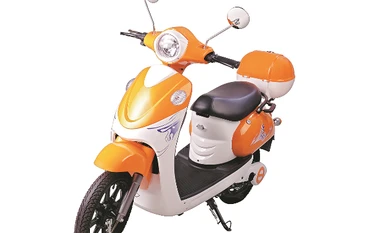
e-scooter, two-wheeler
e-scooter
Sohini Das Ahmedabad
Last Updated : Sep 05 2017 | 2:33 AM IST
Electric two-wheeler sales are expected to double in FY18, albeit on a small base. But, it is still a niche category in the world’s biggest market for two-wheelers. About 23,000 units of electric two-wheelers, primarily scooters, were sold in a market of 17.58 million units in FY17.  

The sector has seen some action in recent times with new entrants trying to make a mark. Seasoned players such as Hero Electric, which was about 70 per cent share, believe that financing options and front-loading of government subsidy might act as a further boost. 

Hero, which plans to launch at least two new scooters every year for the next few years, said it would double its sales in FY18. “We plan to sell about 25,000 units in FY18,” said Sohinder Gill, chief executive officer, Hero Electric.  

He said that e-scooters’ existing customer base look at a vehicle that has a low price point, but gradually, with the lithium-ion battery-driven vehicles — which perform on a par with conventional scooters — a new customer base is evolving and they are willing to shell out more. “Our range starts from Rs 19,900, but these are lead acid battery vehicles,” Gill said. 

About four years ago, a lithium-ion battery would cost double compared to the current price. These batteries have a five-year life and cost about Rs 25,000 a unit. Companies such as Hero are committing to offer lithium-ion batteries to their existing customers at Rs 17,000 a unit, five years from now. “We know the trends in the global market, and prices are likely to keep coming down for batteries,” Gill said. 

Okinawa Autotech, which plans to invest $40 million over the next three years, is building capacity anticipating the future demand. It is building a one-million-units-per-annum plant in Rajasthan. The company targets sales of 12,000 units in FY18 and has set an ambitious target of 100,000 units by FY19. 

Jeetender Sharma, managing director of Okinawa, said they are getting the lithium-ion batteries manufactured locally through a vendor. “The battery design has been done by the company, and a Delhi-based supplier is manufacturing it,” Sharma said. He is expecting the e-scooters’ market to double in this financial year. 

Another start-up in this space is Ather Energy. It is close to launching its first vehicle in the domestic market, the Ather S340. The company claims it is the fastest e-scooter in the country. The S340 will first be available in three cities — Bengaluru, Pune and Chennai — in 2018. Ather has an investment of Rs 200 crore from domestic two-wheeler major Hero MotoCorp. 

The Ather S340 has a top speed of 72 km per hour, a range of 60 km, and comes equipped with fast charging. 

Makers are now working on offering an improved user experience in e-scooters to boost adoption. While the S340 comes fitted with a touch screen and cloud connectivity, Okinawa is working on an e-scooter that would run 200 km on a single charge. Sharma said his firm was close to launching the vehicle within FY18. 

Apart from small players, bigger original equipment manufacturers, too, are focussing on the sector. Gill said as all these years the market had negative growth, big players were in wait-and-watch mode. 

TVS is all set to launch a hybrid scooter in December followed by an e-scooter in March and reports suggest that Bajaj, too, is working on an electric motorcycle. Honda Motorcycle and Scooter India is working on an e-scooter model that would also be launched in the Indian market.

TVS Chairman Venu Srinivasan had recently said, “Hybrid vehicle will come out this year by December 2017. Our electric vehicles will also come by February-March 2018 and will be using our own battery management system.” 

Industry players, however, feel that for volumes to pick up, bank financing is the key. “Let us not waste the government subsidy. While the subsidy should be front-loaded with a limited time offer that would bring down prices significantly to Rs 45,000 levels, this should see a rush for buying. Plus, the RBI (Reserve Bank of India) might provide guidance to banks for preferential financing to this sector,” Gill said.


Looking ahead 

  • Hero plans to launch two new scooters every year for the next few years
     
  • It also plans to sell about 25,000 units in FY18
     
  • The range will start from Rs 19,900 for lead-acid battery vehicles
     
  • Okinawa Autotech plans to invest $40 million over the next three years
     
  • It targets sales of 12,000 units in FY18
     
  • Okinawa is working on an e-scooter that would run 200 km on a single charge
     
  • Industry players, however, feel that bank financing is the key for volumes to pick up


One subscription. Two world-class reads.

Already subscribed? Log in

Subscribe to read the full story →
*Subscribe to Business Standard digital and get complimentary access to The New York Times

Smart Quarterly

₹900

3 Months

₹300/Month

SAVE 25%

Smart Essential

₹2,700

1 Year

₹225/Month

SAVE 46%
*Complimentary New York Times access for the 2nd year will be given after 12 months

Super Saver

₹3,900

2 Years

₹162/Month

Subscribe

Renews automatically, cancel anytime

Here’s what’s included in our digital subscription plans

Exclusive premium stories online

  • Over 30 premium stories daily, handpicked by our editors

Complimentary Access to The New York Times

  • News, Games, Cooking, Audio, Wirecutter & The Athletic

Business Standard Epaper

  • Digital replica of our daily newspaper — with options to read, save, and share

Curated Newsletters

  • Insights on markets, finance, politics, tech, and more delivered to your inbox

Market Analysis & Investment Insights

  • In-depth market analysis & insights with access to The Smart Investor

Archives

  • Repository of articles and publications dating back to 1997

Ad-free Reading

  • Uninterrupted reading experience with no advertisements

Seamless Access Across All Devices

  • Access Business Standard across devices — mobile, tablet, or PC, via web or app

Next Story



