When ArcelorMittal in October last year revised its bid for debt-laden Essar Steel to Rs 42,000 crore, steel prices in the domestic market were peaking with the benchmark hot-rolled coil price hovering close to Rs 46,000 a tonne.
Thirteen months later as the cloud over the deal is clearing, prices have tumbled by close to 25 per cent.
In February last year, when the world’s largest steel maker threw its hat in the ring for Essar, steel prices were at Rs 43,000 a tonne, much higher than its current level of Rs 34,000-35,000 a tonne, and the bid amount lower at Rs 35,000 crore.
But the bid submission set off a chain of court battles and finally ended in a revised bid of Rs 42,000 crore. In the interim, the steel cycle turned. Add to it, the Rs 7,469 crore that Arcelor had to pay to become eligible for the bid under India's insolvency law, and it adds up to nearly Rs 49,670 crore.
ArcelorMittal didn’t comment.
Under the law, Arcelor had to pay Rs 7,469 crore to financial creditors of Uttam Galva Steels and KSS Petron — both defaulting firms — to be considered eligible for Essar Steel. At the time of paying the Uttam Galva debts, ArcelorMittal had said it was considering taking ownership of the company.
Under the Insolvency and Bankruptcy Code (IBC), a promoter of an insolvent company is not eligible to bid for another insolvent company.
“It's an expensive buy but getting an asset like Essar is virtually impossible. The asset is top of the line,” said Ankit Miglani, promoter of Uttam Galva Steels.
According to Miglani, the additional payment on account of Uttam Galva and KSS dues was a painful cover charge to enter India. “Though I am grateful, it’s not fair to ArcelorMittal.”
ICRA Assistant Vice-President (corporate sector ratings) Ritabrata Ghosh, however, pointed out that Essar had an effective steelmaking capacity of 9.6 million tonnes.
“Even if the payment for Uttam Galva and KSS at Rs 7,469 crore is loaded, the cost increases to around Rs 50,000 crore. The per tonne cost of acquisition would be $730 per tonne which compares favourably with Bhushan Steel at $886 per tonne and Bhushan Power (yet to be completed) at $925 per tonne,” he said.
The high value of stressed steel assets also reflect the uncertainty of putting up a greenfield projects in India apart from the cost which is $1 billion for a million tonne capacity.
The acquisition, however, is being taken to a logical end at a time when ArcelorMittal, which produces around 5 per cent of global steel, has forecast a contraction in steel demand.
Sanak Mishra, who was chief executive officer of ArcelorMittal's India projects when it was still actively pursuing its greenfield plants, said in the last 50 years up to 2018, the Indian steel market had grown 17-fold compared with growth of four times for the world including China.
Even in the worst of times, steel demand is growing by 5-6 per cent, said Ghosh.
Mishra also added that Essar’s Hazira plant was a world-class asset. He had advised Essar Steel for a year. The past two years have been good for Essar Steel. In 2018-19, Ebidta stood at Rs 4,400 crore; in the first quarter of this year it was Rs 1,100 crore and that in the second quarter Rs 750 crore.
ArcelorMittal, however, will have to make capital expenditure once it takes over. Its resolution plan has indicated a capital expenditure plan of Rs 18,697 crore to be implemented in two stages over six years.
Ghosh, however, said that the immediate capex requirement in the near term could be around Rs 3,000 crore which would help Essar bring down operating costs, start operations at the previously won Odisha iron ore mine and fully operationalise the 12-million-tonne Paradip pellet plant.
Also, it would have to settle issues around the Odisha slurry pipeline. Sources indicated that it could extend the lease or a buyout was also possible if debts were paid. The pipeline’s debts could be in the region of Rs 2,000-2,500 crore.

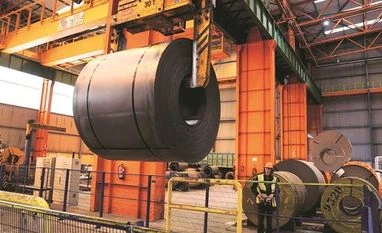 "In a weak market, homecoming costs Lakshmi Mittal Rs 49,670 crore")











