Farm-to-fork fails to take off as dependence on mandis continues

Despite government effort, food companies, retailers continue to depend mainly on mandis for procurement
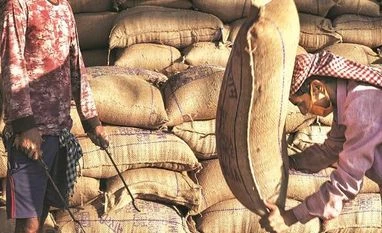
food procurement, mandis
Experts say the lockdown period was the best time for this system to be upended and for the farm-to-fork model
Viveat Susan Pinto
5 min read Last Updated : Apr 29 2020 | 10:41 PM IST
Protests have marred this year’s wheat procurement season across the north Indian belt. At the heart of the agitation are commission agents or arhtiyas, who’re upset the government is pushing for companies and retailers to engage directly with farmers. 

Arhtiyas are a powerful lobby of brokers in rural India, who’ve traditionally called the shots in the agricultural value chain, lending money to farmers to conduct their farming activities and helping them sell produce in mandis or marketplaces once the harvest is ready. 

Experts say the lockdown period was the best time for this system to be upended and for the farm-to-fork model, argued for years as being both consumer and farmer-friendly, to take shape. 

Circulars and notifications issued earlier this mo­nth by the agriculture ministry, before the wheat procurement season began on April 15, were intended to do just that. The measures, put in place for a period of three months, were aimed at limiting the jurisdiction of APMCs (Agricultural Produce Market Co­mmittees) to their physical premises and allowing retailers, food processors and commodity companies to buy di­rectly from the farmers, not only decongesting mandis, required during the Covid-19 crisis, but also giving farmers the opportunity to earn better prices for their produce.

Typically, arhtiyas pocket a significant portion of the sale price in the name of commission, say experts, leaving farmers with a paltry amount for their produce. This has led to a vicious cycle of poverty and debt, leading to farmer suicides. 

Data from the National Crime Re­cords Bureau, released earlier this year, shows that at least 10,349 farmers committed suicide in 2018 due to their inability to repay loans. Data for 2019 has not been released yet.
Although the governme­nt’s initiative is noble, says Siraj Chaudhry, managing director and chief executive officer of National Collateral Management Service, an ag­ri- and commodity-services player, it is hard to implement. Arhtiyas perform a service for farmers in terms of transporting their produce to market and extending loans, functions that have made them powerful players in the agri-distribution chain.  

“It is difficult to leave out the arhtiyas in the sale process. That is the fact of the matter. It is better instead to have a system that makes both arhtiyas and farmers comfortable rather than alienating the two. This is because the farmer tends to go back to the arhtiya for his farming requirements. He therefore finds it hard to upset the latter,” he says.

That commission agents also have political backing is an open secret. So state governments, say experts, have been slow to implement the measures proposed by the ministry so far. In places such as Punjab, the wheat bowl of India, where some district authorities have taken the initiative, protests by arthiyas have stalled procurement wo­rk, forcing officials to reverse their position. 

Companies and retailers too prefer to procure from mandis (using arthiyas as middlemen) since price discovery is better at these places. “An arthiya’s involvement ensures better negotiation on price. Second, even if we are open to farmers coming directly to us, my observation is that none of them are prepared to engage directly with firms,” says Ang­hsu Mallick, deputy chief executive offi­cer at Adani Wilmar, which makes the Fortune brand of edible oil and food products. 

Experts say that companies are un­willing to pay for produce at minimum support price, which is what the government is asking buyers to do, pushing them to keep the status-quo going. Fa­rmers too, they say, cannot wait too long for the right set of buyers once the crop is harvested, since there is the issue of perishability of goods, especially in the case of fruits and vegetables.

As such, farmers require cash to pay off intermediaries. Plus, they need to ensure that they have sufficient savings at the end of the harvest season to support their livelihood, say experts, not to mention that many have to repay loans taken for the farming process. 

As Chaudhry says that it is a “catch-22” situation and one that requires considerable thought and a deep understanding of ground realities. 

Some firms such as the Future Group, which is into both manufacturing and retailing operations, have opted to turn to multiple channels including mandis, virtual platforms and farmer co-operatives to meet their procurement requirements.

“It is difficult for one to replace the other,” says an official from the group. “Mandis have been around for so long and have a role to play in the rural economy. While the system requires reform, it would have to be done slowly, keeping interests of all stakeholders in mind,” the executive said. 

PepsiCo India, for instance, had si­gned contracts with farmers in Punjab and West Bengal to procure potatoes for its food business. They are also exploring contracts for citrus fruits. These have been on a limited scale though and do not preclude these farmers selling to other buyers. Cigarettes-to-hotels major ITC, which has a presence in food and fast-moving consumer goods, has for years depended on an online platform called e-choupal, which connects them directly to farmers for their sourcing requirements.

Over the last two decades, the platform, promoted by ITC, has evolved to link farmers with buyers in general, allowing transparent price discovery and optimum sale value, besides providing all necessary information to them, including weather up­dates, details on farm inputs, crop and soil efficiency as well as information on best farming methods and financial products. But it remains the outlier in a wo­rld that still revolves around the mandi. 

One subscription. Two world-class reads.

Already subscribed? Log in

Subscribe to read the full story →
*Subscribe to Business Standard digital and get complimentary access to The New York Times

Smart Quarterly

₹900

3 Months

₹300/Month

SAVE 25%

Smart Essential

₹2,700

1 Year

₹225/Month

SAVE 46%
*Complimentary New York Times access for the 2nd year will be given after 12 months

Super Saver

₹3,900

2 Years

₹162/Month

Subscribe

Renews automatically, cancel anytime

Here’s what’s included in our digital subscription plans

Exclusive premium stories online

  • Over 30 premium stories daily, handpicked by our editors

Complimentary Access to The New York Times

  • News, Games, Cooking, Audio, Wirecutter & The Athletic

Business Standard Epaper

  • Digital replica of our daily newspaper — with options to read, save, and share

Curated Newsletters

  • Insights on markets, finance, politics, tech, and more delivered to your inbox

Market Analysis & Investment Insights

  • In-depth market analysis & insights with access to The Smart Investor

Archives

  • Repository of articles and publications dating back to 1997

Ad-free Reading

  • Uninterrupted reading experience with no advertisements

Seamless Access Across All Devices

  • Access Business Standard across devices — mobile, tablet, or PC, via web or app

Topics :CoronavirusLockdowne-mandiMandiAPMC mandisFuture GroupFood productionfood processing

Next Story



