Industrial gases are literally produced out of thin air, with no raw material required. Since atmospheric air comprises 78 per cent nitrogen and 21 per cent oxygen, with other gases accounting for one per cent, deriving these products separately requires a process that uses compression, freezing and separation technologies.
With the demand for medical oxygen soaring in the country, Tata Advanced Systems Limited and Trident Pneumatics intend to use technology developed by the Defence Research and Development Organisation (DRDO) for fighter jets to set up the pressure swing adsorption (PSA) technique and molecular sieves (zeolite) to generate oxygen directly from atmospheric air.
DRDO’s technology is an offshoot of the on-board oxygen generating system (OBOGS) that replaces the liquid oxygen system (LOX) by utilising bleed air from the aircraft engine and separating its components using molecular sieve PSA technology. The system consists of two molecular sieve beds with oxygen plenum to provide breathing gas to aircrews. India is the world’s fourth country to develop this technology.
Termed “medical oxygen plant”, it has been developed by DRDO for on-board oxygen generation for Tejas, the light combat aircraft. The technology is used for providing oxygen support to fighter pilots and at Army posts in the north-east and Ladakh, because at high altitudes the oxygen content of air is low.
Experts say OBOGS has advantages over the LOX system. It does not require regular maintenance, but more importantly, OBOGS eliminates the need to store and transport liquefied oxygen. At the height of the second Covid wave, India’s real problem was not the supply of oxygen, but the ability to transport it to various parts of the country.
It’s important to understand how oxygen is derived from gases. Two technologies, cryogenic and non-cryogenic, are used for gas production. Cryogenics is about dealing with very cold temperatures (below minus 150 degrees centigrade), and is used for both production and transportation of gases. Air is cooled to minus 197 degrees centigrade. Later, a distillation column is used for separating oxygen, nitrogen, and argon.
When medical oxygen demand increased in the country because of the pandemic, industrial gas producers directed all their capacity towards increasing production. Industrial gas plants have a refrigeration capacity that is produced by compressing air. Compressors used in these plants are similar to those used in room air-conditioning and other industrial applications, and so companies such as Elgi Equipments, which has manufacturing facilities in India, Italy and the United States, increased capacity to help meet demand.
The compressed air is expanded in a turbine so that refrigeration is produced. “We assessed how much capacity we had in these turbines. We cut down liquid nitrogen and argon production, so that the cold which was used for producing them is diverted to produce more liquid oxygen,” explains Moloy Banerjee, head (gases)-South Asia, Linde South Asia Pvt Ltd.
Non-cryogenic technology has two methods: PSA and vacuum pressure swing adsorption or VPSA. The technology keeps air at ambient temperature and uses molecular sieves (which are like scrubbers and act as a filter) to separate out the constituents. These molecular sieves are the heart of PSA plants that are now being set up across the country for oxygen production. One variant of this technology is VPSA plants.
Linde Germany manufactures these sieves, which are like small pellets of a compound that have a surface with the capacity to take in certain gases, depending on the nature of the sieve, and allow the rest of the gas to pass through, explains Banerjee. Air is passed over the pellets, and they selectively adsorb one of the components of air, and let the others pass through.
“The ability to absorb increases with pressure, and if you pressurise the air it will selectively absorb the oxygen, following which you depressurise to release the oxygen,” he says.
The oxygen plant, based on the OBOGS system, is designed for a production of 1,000 litres per minute (LPM). The system can cater to 190 patients at a flow rate of 5 LPM and charge 195 cylinders a day.
While Tata Advanced Systems intends to put up 332 such plants, Trident Pneumatics will set up 48 plants for installation in various hospitals across the country. Some 120 plants of 500 LPM capacity are to be produced by companies working with the Indian Institute of Petroleum, Dehradun.

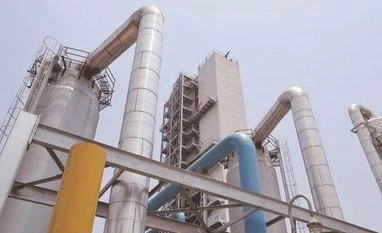 "How DRDO's tech comes in handy to ramp up medical oxygen output")












 Connect with us on WhatsApp