IL&FS: Contagion is off the table but it doesn't mean the saga is over

The government's step alone won't allay all fears concerning non-bank financing companies
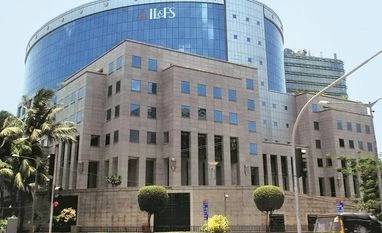
IL&FS
IL&FS
Bloomberg
Last Updated : Oct 03 2018 | 10:47 AM IST
India’s shock seizure of a troubled shadow bank on Monday means contagion’s off the table. It doesn’t mean the saga’s over.

That’s the verdict of strategists and investors after Prime Minister Narendra Modi’s government took control of Infrastructure Leasing & Financial Services Ltd., promising to end the group’s string of defaults.

But the giant IL&FS group still owns long-term infrastructure financed with short-term funding, and its new board will need to make progress selling assets to pare $12.6 billion of debt. Getting it right is key for India to avoid further financial sector angst, which the nation hardly needs as it grapples with surging bond yields and a record-low rupee.

The government’s move on IL&FS is “a step in the right direction and will calm investor nerves to some extent," said Lakshmi Iyer, chief investment officer of debt at Mumbai-based Kotak Mahindra Asset Management Co. In terms of ending the contagion risk for good, “a lot of that will depend on the new management’s plans to turn the company around.”

The company’s new leaders face a whirlwind month ahead, after inheriting a restructuring process that just saw IL&FS shareholders sign off on a non-convertible debt sale, a higher borrowing limit and a rights offering. To add to that, an investigation by the federal Serious Fraud Investigation Office has been ordered.

The new board will meet before Oct. 8, the National Company Law Tribunal said on Monday. It must devise a plan and file a response to NCLT by Oct. 15. The tribunal will next hear the matter on Oct. 31.

The fallout from IL&FS’s saga means that the central bank, which meets later this week, must also strike the right balance after the conglomerate’s shock defaults stirred unease. It needs to supply enough liquidity to turn around the worst cash crunch in a couple years, while also keeping interest rates high enough to fight inflation amid a tumble in the rupee.

For sure, initial market reactions indicated optimism. The government put in place a new board that included India’s richest banker Uday Kotak, which brought instant name recognition. The pledge to avoid more nonpayments also now allows creditors to posit that IL&FS’s debt is as unlikely to default as the government’s own borrowings.

Financials Rebound

Shares of group companies surged Monday: IL&FS Transportation Networks Ltd. jumped 19 percent, IL&FS Engineering & Construction Co. rose 20 percent and IL&FS Investment Managers Ltd. gained 9.7 percent.

There was also a rebound in Indian financial shares, which had been battered last month. The S&P BSE Finance Index closed up 1.2 percent, wiping out an earlier slump. Financial stocks will probably continue finding support. And borrowing costs for non-bank lenders are unlikely to rise sharply for now, analysts say.

“This ends the contagion stemming from IL&FS,” said Alexander Zeeh, chief executive officer of Singapore-based S.E.A. Asset Management. “However, there is still a large degree of uncertainty especially as the government is starting a corruption probe into IL&FS.”

The group’s defaults from August on commercial paper, considered rock-solid until just weeks before that, have also led to criticism that rating companies missed an epic failure.

The problems sparked concern among households holding mutual funds invested in such debt, and forced money managers to brace for further losses.

Lingering Concerns

“From what we know now, it’s a welcome move,” said Aashish Somaiyaa, chief executive officer at Motilal Oswal Asset Management Co. in Mumbai.

But the government’s step alone won’t allay all fears concerning non-bank financing companies, he said. Some of them relied on issuing commercial paper to mutual funds, whose investors are now more cautious after the IL&FS defaults. There are also asset-liability mismatches. And higher interest rates impact their profitability, according to Somaiyaa.

That’s where the Reserve Bank of India comes into the picture. The central bank has raised interest rates twice this year -- and is likely to do so again on Friday -- to ward off inflation pressures. At the same time, it has allowed banks to dip further into statutory liquidity reserves.

“There will be some improvement in market sentiment but it will also be determined by how liquidity is in the market,” said Karthik Srinivasan, the Mumbai-based group head of financial sector ratings at ICRA Ltd.

One subscription. Two world-class reads.

Already subscribed? Log in

Subscribe to read the full story →
*Subscribe to Business Standard digital and get complimentary access to The New York Times

Smart Quarterly

₹900

3 Months

₹300/Month

SAVE 25%

Smart Essential

₹2,700

1 Year

₹225/Month

SAVE 46%
*Complimentary New York Times access for the 2nd year will be given after 12 months

Super Saver

₹3,900

2 Years

₹162/Month

Subscribe

Renews automatically, cancel anytime

Here’s what’s included in our digital subscription plans

Exclusive premium stories online

  • Over 30 premium stories daily, handpicked by our editors

Complimentary Access to The New York Times

  • News, Games, Cooking, Audio, Wirecutter & The Athletic

Business Standard Epaper

  • Digital replica of our daily newspaper — with options to read, save, and share

Curated Newsletters

  • Insights on markets, finance, politics, tech, and more delivered to your inbox

Market Analysis & Investment Insights

  • In-depth market analysis & insights with access to The Smart Investor

Archives

  • Repository of articles and publications dating back to 1997

Ad-free Reading

  • Uninterrupted reading experience with no advertisements

Seamless Access Across All Devices

  • Access Business Standard across devices — mobile, tablet, or PC, via web or app

Next Story


