To us, innovation isn't linked to premiumisation: Prabha Parameswaran
Interview with Managing director, Colgate-Palmolive India
Viveat Susan Pinto Prabha Parameswaran, managing director, Colgate-Palmolive India (CPIL), took over when competition in the oral care market was at a peak, with the entry of GlaxoSmithKline Consumer Healthcare and persistent talk of the impending launch of rival Procter & Gamble’s toothpaste. Parameswaran, who joined CPIL in 1995 and worked in the US and Mexico, has been focused on growing sales here. Her efforts have paid, with market share growing through the past two years. In her first media interaction, she talks to Viveat Susan Pinto about whether Colgate will look at acquisitions in India. Edited excerpts:
Are you looking at acquisitions? Will you look at emerging oral care categories for acquisitions? We’re open to acquisitions if these strategically fit our growth model. Yes, organic growth has been a big driver for us but that doesn’t mean we won’t look at acquisitions. Whether we will specifically look at certain segments for acquisitions is something I can’t comment on; suffice to say these are always on our radar.
In the past two years, Colgate has increased its innovation pipeline to stave off competition and premiumise portfolio. What is your investment in it? There is significant investment in our innovation and technology centres, co-located in Mumbai, where our consumer marketing team is housed. This is a model we have in all key markets, where we believe the interface of technology, innovation and marketing is critical. Let me clarify — to us, innovation is not linked to premiumisation alone. We are doing it at the upper and lower ends of the market. For instance, the cavity protection product we will launch, with an innovative sugar neutraliser acid, is priced at a 20 per cent premium to regular toothpastes. It isn’t as significantly priced as, say, a whitening or sensitivity toothpaste.
What steps are you taking to improve reach of oral care in rural areas? As a category, the reach of oral care is 63 per cent in rural and 90 per cent in urban areas. Certainly, there is an opportunity for us to improve the reach in rural regions. To achieve this, we are taking a few steps; distribution is one area. We have, for instance, doubled direct coverage of our stores in rural areas through the past year. The idea is to provide a wider assortment of products to rural users compared to what was available through wholesale channels. At the same time, we are also reaching rural users through school-contact programmes, initiatives at the community level, programmes targeting health workers, etc. These should help us improve rural reach.
Your attempt to double direct coverage in villages is also linked to your urban skew in distribution. How many villages do you reach now? We reach 4.6 million retail outlets nationally. Of this, 60 per cent is in urban and 40 per cent in rural areas. So, it is not as if we don’t have a competitive advantage in rural regions. We do but I can’t give you the number of villages we reach because that way, we will be alerting competition. However, we are considering increasing our reach into rural areas, even to 2,000-strong villages. When targeting villages, we do keep affluence in mind. The challenge is to reach more stores in rural areas, because that’s what drives sales.
Beside toothpaste and toothbrush, do you plan launches in emerging categories like mouthwash? Yes. We will look at all ends of the oral care market. We will look at innovation of product forms, how we can improve delivery systems or product benefits.

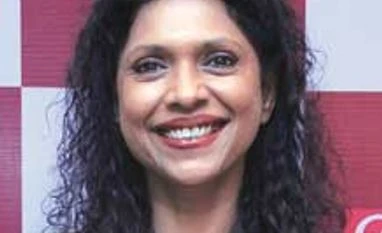 "To us, innovation isn't linked to premiumisation: Prabha Parameswaran")


 Connect with us on WhatsApp