Intas enters big league with $1-bn bid for Teva assets
The presence of PEs on the company's board has ensured our strategies are validated: Binish Hasmukh Chudgar
Abhineet Kumar Mumbai Private equity (PE)-backed Intas Pharmaceuticals has made a $1-billion bid for acquiring Israeli generics giant Teva's UK and Irish assets. This indicates its entry into the big league of Indian pharma giants as it competes with domestic rival Aurobindo Pharma along with global biggies Mylan and Novartis.
Teva is selling assets as part of a broader divestiture process to comply with the anti-trust regulations for its $40.5-billion acquisition of Allergan Plc's generics business that was announced last year.
Such a bid would be audacious for the Ahmedabad-based company, which clocked its first $1-billion annual revenue in March. But, Intas looks quite at ease with the backing of Chrys Capital and Temasek which own six per cent and 10 per cent, respectively, in the company.
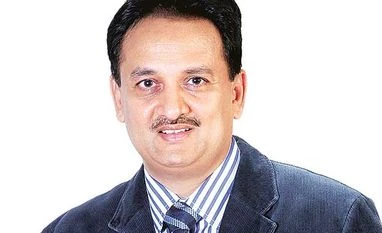
"While our management decisions have been the most valuable for our growth, the presence of PEs on the company's board has ensured our strategies are validated," says Binish Hasmukh Chudgar, vice-chairman of Intas Pharmaceuticals.
Privately held Intas started exports to Europe in 2001 as one of the first Indian generic companies to tap developed markets. With Rs 6,700 crore in annual turnover, Intas is the 11th largest domestic pharmaceutical company by revenue with focus on super speciality in central nervous system, nephrology, gastroenterology, urology, orthopaedics and cardiology-diabetics segments. Fifty-five per cent of its revenue comes from exports to 72 countries.
It has the largest number of indigenously developed biosimilars (reverse-engineered biotech drugs) in the domestic market. Hospital supply and oral solid are the two other business divisions of the company. Last year, it acquired the hospital supply business of Spain's Corporacion Combino Pharm for an undisclosed amount.
Through this acquisition, it obtained certain rights over Combino's hospital portfolio in a number of European and non-European countries. The acquisition on Teva's assets in the UK and Ireland will help the company leap-frog for its third business division of oral solids. The firm has been growing at a compounded annual growth rate of 20-25 per cent in the last decade and it expects to maintain the growth rate for next 4-5 years. "Any significant acquisition will only provide an additional growth on top of our expected organic growth," says Chudgar.
Intas signifies why pharmaceuticals remains one of the favourite investment targets for PE firms in India. In 2014, Chrys Capital sold its first investment in Intas - 10.16 per cent stake bought for Rs 53 crore in 2005 - for Rs 880 crore. This gave it 17 times return after nine years of investment. This stake was bought by Temasek, which stays invested. Chrys Capital still holds six per cent stake in the company that it bought in 2012 for about Rs 300 crore.
Private investments in healthcare rose to an estimated $1.6 billion last year, surpassing the previous peak of 2013 as investors did larger transactions across pharmaceuticals, hospitals and diagnostic chains. The sector also gave the largest PE exit this year when Shanghai Fosun Pharmaceutical bought a 86 per cent stake in Hyderabad-based Gland Pharma in July for $1.26 billion. It gave global private equity giant KKR & Co 2.67 times return on $231-million investment made 30 months ago.
"Mid-sized pharma companies have used PE capital for capacity expansion and market expansion," says Mayank Rastogi, partner, transactions and PE at EY. "Both these are capital-intensive needs and PE capital has helped the promoters de-risk."

 "Intas enters big league with $1-bn bid for Teva assets")

