Isuzu banks on growing UV market, export

It sold approximately 3,000 units in FY17, with some of these being CVs
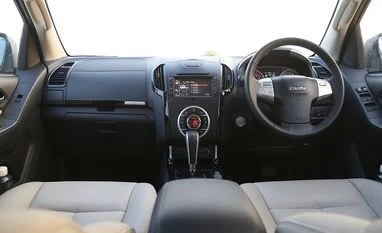
Isuzu mu-X
Isuzu mu-X
Ajay Modi New Delhi
Last Updated : Jun 16 2017 | 3:07 AM IST
Isuzu, the Japanese manufacturer, says it expects to benefit from a fast expanding utility vehicle (UV) segment. It also plans to use India as a base to export vehicles to some of the 100-plus markets catered to by the group, which has operations in 25 countries.

The company inaugurated its India plant in April last year. The Rs 3,000-crore facility has annual capacity for 50,000 units, which can be scaled up to 120,000 vehicles. The company entered India in 2012 and was using Hindustan Motors' plant in Tamil Nadu under a contract manufacturing agreement, to make utility and commercial vehicles (CVs).

It sold approximately 3,000 units in FY17, with some of these being CVs.

"We are very humble. Our starting point is not to occupy some market share. We want to slowly expand to a group of people who will appreciate our products. We are a truck company with a focus on durability, fuel efficiency, safety, etc..we don't have anything you don't need," Hitoshi Kono, deputy managing director at Isuzu Motors India, recently told Business Standard.

It started shipping D-Max pick-ups to Nepal early this year and will target more neighbouring markets, before reaching out to markets in West Asia and Africa. "Isuzu is a well-accepted brand in most parts of the world. We only need to decide if the headquarters wants to source from the Indian plant or the Thailand plant," said Kono.

The plant in Thailand, its top market, has a capacity to make 300,000 units a year. Kono sees India as a market next to Thailand in terms of importance in the near future.

The domestic UV market grew 30 per cent last year to 0.76 million units, a fourth of the total passenger vehicle (cars, vans and UVs) market. "We think the growth of SUVs is really good for us. More people are considering SUVs as an entry vehicle, against small hatchbacks. People will jump to bigger SUVs gradually, once they appreciate the concept," said Kono.

The company is not planning to make compact SUVs, which has become a popular segment in itself.

The concept of a vehicle for both commercial and personal use is new to this country. "Not many people have experienced this in India, as there was no supply. You can use this instead of having two vehicles. We want buyers who heavily depend on a vehicle for personal and business use," says Kono.

One subscription. Two world-class reads.

Already subscribed? Log in

Subscribe to read the full story →
*Subscribe to Business Standard digital and get complimentary access to The New York Times

Smart Quarterly

₹900

3 Months

₹300/Month

SAVE 25%

Smart Essential

₹2,700

1 Year

₹225/Month

SAVE 46%
*Complimentary New York Times access for the 2nd year will be given after 12 months

Super Saver

₹3,900

2 Years

₹162/Month

Subscribe

Renews automatically, cancel anytime

Here’s what’s included in our digital subscription plans

Exclusive premium stories online

  • Over 30 premium stories daily, handpicked by our editors

Complimentary Access to The New York Times

  • News, Games, Cooking, Audio, Wirecutter & The Athletic

Business Standard Epaper

  • Digital replica of our daily newspaper — with options to read, save, and share

Curated Newsletters

  • Insights on markets, finance, politics, tech, and more delivered to your inbox

Market Analysis & Investment Insights

  • In-depth market analysis & insights with access to The Smart Investor

Archives

  • Repository of articles and publications dating back to 1997

Ad-free Reading

  • Uninterrupted reading experience with no advertisements

Seamless Access Across All Devices

  • Access Business Standard across devices — mobile, tablet, or PC, via web or app

Next Story



