Jeff Bezos must take note of Panchjanya magazine's disapproval seriously

Ahead of Indian festive season Amazon's headache, building up for more than five years, could turn into a throbbing migraine.
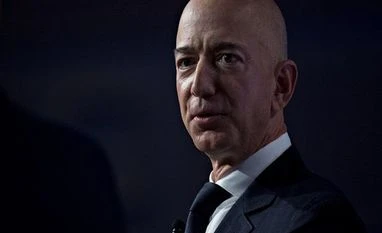
Jeff Bezos, Amazon
Amazon founder Jeff Bezos. (Photo: Bloomberg)
Andy Mukherjee | Bloomberg Opinion
6 min read Last Updated : Sep 30 2021 | 9:15 AM IST
The world’s second-richest man is getting an almost-daily reminder of how tough it will be to win in the second-most-populous nation. Unlike in China, where the recent attack on tech titans has been delivered with the full formal might of state power, the latest blow on Amazon.com Inc. in India has come from unexpected, and unofficial, quarters.

Chairman Jeff Bezos is on the cover of Panchjanya, a Hindi weekly he’s unlikely to have ever heard of. The article inside, provocatively titled “East India Company 2.0”, goes on to argue that Amazon is threatening the economic freedom of small Indian traders, attempting to hijack policies and politics, and--via Prime Video--degrading Hindu culture and promoting Western values and Christianity.

There can be nothing flattering in being compared to the 17th-century British firm that came to trade with a rich, vast land only to end up conquering and plundering it. But does the opprobrium really mean much? Both Bezos and his empire have faced robust criticism around the world, for everything from low pay and poor working conditions in the retailer’s warehouses to its alleged anti-competitive practices. Speaking of unfavorable articles, Lina Khan earned her spurs with her 2017 Yale Law Journal entry, “Amazon’s Antitrust Paradox,” and she’s now the chair of the U.S. Federal Trade Commission.


The reason to take the Indian publication’s disapproval seriously is that Panchjanya, “the sound of righteousness,” isn’t any other magazine. Founded by one of the leading figures of the Rashtriya Swayamsevak Sangh, or the RSS, it’s widely believed to be a mouthpiece of the Hindu cultural organization that stands behind Prime Minister Narendra Modi’s government, nurturing his right-wing nationalist party with ideological sustenance and voter mobilization.

The timing of Amazon’s bad publicity couldn’t have been worse. The media site Morning Context recently reported that the Seattle-based e-commerce firm is investigating a whistleblower complaint, which alleged that certain monies paid by the retailer have been funneled into bribes by one or more of its legal representatives in India. In its reply to the news website’s questionnaire, Amazon said it had “zero tolerance” for graft. It declined to confirm the specific allegations or the status of any investigation. 

What is the scale of this alleged bribery? Soon after the Morning Context exclusive, there was a flurry of other media reports, which cited anonymous sources to put a number on what various Amazon entities had spent as legal fees in India in two years: 85.46 billion rupees ($1.2 billion). The Confederation of All India Traders, which accuses the platform of hurting small sellers, latched on to the figure and wrote to Commerce Minister Piyush Goyal — himself no fan of e-commerce platforms — about a “whopping amount” being spent to “manipulate Indian government officials.”

Amazon said the number was a misleading representation. Amazon Seller Services Pvt., which is the marketplace in India, paid 520 million rupees in legal fees in a year when it incurred almost 20 billion rupees in expenses on account of “legal and professional services,” which includes everything from accounting and customer research to merchant onboarding costs and logistics services. It seems the $1.2 billion figure also included payments by Amazon India Ltd. — a 26-year-old, completely unrelated firm tucked away in the old, Mughal part of Delhi and engaged in the “growing of crops.” 


Regardless, the e-commerce behemoth has to investigate the whistleblower complaint. Based on the findings, the U.S. Securities and Exchange Commission, which enforces the Foreign Corrupt Practices Act jointly with the Department of Justice, will have to determine if the law was broken. But Panchjanya isn’t waiting for any of that.

In Amazon, it has found its rapacious colonizer come to destroy India all over again. “Why does anyone need to offer a bribe?” the article asks. “Only to do something wrong or to hide it.” Online buying doesn’t account for even a 10th of India’s $800 billion retail trade. Yes, Amazon runs one of two dominant digital marketplaces and has valuable customer data. But it’s nowhere as powerful or all-pervasive as China’s Alibaba Group Holding Ltd. A Prime Video series in India, made by Indian writers and directors, can say all it wants against caste, misogyny or religious hatred. It won’t move the needle during elections, which routinely make use of all kinds of prejudices to polarize voters.  

So why is Amazon being called on the carpet? Simple answer: Diwali. The Indian festive season is approaching, and the pandemic is in retreat. People who have stable jobs and incomes--members of a shrunken middle class--want to breathe. And they want to buy. To destabilize the American giant now will push more business to homegrown offline retailers. New rules that will protect them--by forbidding e-commerce market places from offering “significantly reduced prices”--are at a draft stage, and facing opposition within the government.

The attacks don’t stop there. The Sept. 5 issue of Panchjanya had on its cover, in a similar unflattering light, Narayana Murthy, a co-founder of software firm Infosys Ltd. The article referred to glitches in the tax e-filing portal the vendor has developed for India to level unsubstantiated accusations that made many in the country’s private sector nervous.

“There are allegations that Infosys management is deliberately trying to destabilize the Indian economy,” it said. Interestingly, Murthy, who’s now just a large shareholder in Infosys, owns, through his family office, three-quarters of Cloudtail, the largest seller of goods made by others on Amazon’s India website. Amazon owns the rest. Facing intense scrutiny on large, connected-party resellers on the retailing website, the partners have agreed to dissolve the joint venture by next year. (Murthy hasn’t publicly commented on the article, while the RSS has sought to distance itself by saying that the magazine is not its mouthpiece.)The scurrilous allegations are only part of the problem. As the Canadian communications theorist Marshall McLuhan said, the medium is the message. 

The RSS, an all-male organization of small traders, builders and businessmen, can be a formidable foe, especially in India’s current climate of strident economic nationalism.

First Bezos’s partner ends up on the wrong magazine cover. Then he does. It’s enough to turn Amazon’s India headache, building up for more than five years, into a throbbing migraine.

(Only the headline and picture of this report may have been reworked by the Business Standard staff; the rest of the content is auto-generated from a syndicated feed.) 

One subscription. Two world-class reads.

Already subscribed? Log in

Subscribe to read the full story →
*Subscribe to Business Standard digital and get complimentary access to The New York Times

Smart Quarterly

₹900

3 Months

₹300/Month

SAVE 25%

Smart Essential

₹2,700

1 Year

₹225/Month

SAVE 46%
*Complimentary New York Times access for the 2nd year will be given after 12 months

Super Saver

₹3,900

2 Years

₹162/Month

Subscribe

Renews automatically, cancel anytime

Here’s what’s included in our digital subscription plans

Exclusive premium stories online

  • Over 30 premium stories daily, handpicked by our editors

Complimentary Access to The New York Times

  • News, Games, Cooking, Audio, Wirecutter & The Athletic

Business Standard Epaper

  • Digital replica of our daily newspaper — with options to read, save, and share

Curated Newsletters

  • Insights on markets, finance, politics, tech, and more delivered to your inbox

Market Analysis & Investment Insights

  • In-depth market analysis & insights with access to The Smart Investor

Archives

  • Repository of articles and publications dating back to 1997

Ad-free Reading

  • Uninterrupted reading experience with no advertisements

Seamless Access Across All Devices

  • Access Business Standard across devices — mobile, tablet, or PC, via web or app

Topics :Jeff BezosAmazon IndiaIndian ecommerce

Next Story



