Land prices crash on slowdown, regulation

In markets such as Gurugram both time and price corrections have happened, in markets such as Mumbai, only time correction has happened
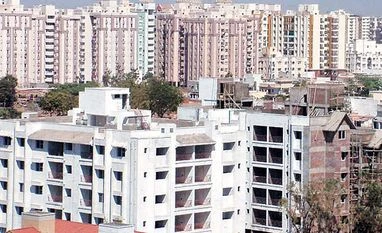
While the service tax charged would go up from 4.5 per cent to 12 per cent, real estate prices would be off-set by ‘input tax credit’ under the GST law, which would help keep the final selling price neutral. BS Photo
Raghavendra Kamath Mumbai
Last Updated : Oct 04 2017 | 12:39 AM IST
Recently, Delhi-based developer BPTP sold a 14.8-acre land parcel to Godrej Properties in Dwarka Expressway in a deal estimated at Rs 350 crore. According to a consultant who has studied the valuation of the deal, the same plot was offered to prospective buyers in 2013 at 28 per cent higher valuation.

In another instance, when Singapore based Ascendas-Singbridge Group bought a 16-acre land parcel in Pune for about Rs 200 crore from a local developer, the group negotiated the deal at eight per cent lower rate than the originally quoted price a couple of years ago, said a source. This is apart from the time correction in the land price.

A mail sent to BPTP did not elicit any response. 

Call it the impact of prolonged slowdown in the real estate market or a Rera or Real Estate (Regulation & Development) Act impact, land values have hit five-year low, say consultants and investors. In markets such as Gurugram both time and price corrections have happened, in markets such as Mumbai, only time correction has happened.

And well-funded companies such as Godrej Properties, Oberoi Realty, Phoenix Mills, K Raheja Corp are making most of the situation as sales of large land parcels have doubled this year compared to last year, say consultants.

"Some developers/land owners are offering land parcels at the same rates they were offering in 2012-13. Time correction is really big," said Somy Thomas, managing director (valuations and advisory) at Cushman and Wakefield India, a property advisory.

Thomas said even if land prices are down 20-25 per cent compared to three to four years ago, what is significant is that land prices haven't gone up in accordance with the inflation, signifying a time correction of 8-10 per cent every year. "Every new deal is happening at new low and the number of buyers is also down. If there were 20 buyers in 2012-13, today there are hardly five buyers in every city," he said.

Vikas Oberoi, chairman of Oberoi Realty, agrees that there are fewer buyers so there is less speculation. "One is able to get land at the right price," Oberoi said. Oberoi Realty recently bought GlaxoSmithKline Pharmaceuticals' 60-acre land parcel at Thane, near Mumbai, for Rs 555 crore. 

Ashish Singh, managing director, real estate investment, Standard Chartered Private Equity Advisory, said land prices in cities such as Gurugram have come down by mid-teen per cent as selling prices of residential units have come down by 20-25 per cent in the last couple of years.

"For the first time there is some softness in land prices and real reduction in prices, especially in National Capital Region and Chennai, where there is softness in prices," Singh said. He said land prices will come down further.

"There is a fundamental difference in how land parcels are valued under Rera. There is an increased responsibility on landowners. Earlier, the land owners did not share much risk in the joint venture model with developers. Now, the risk quotient of landowners will also go up," he said.

With mandatory 70 per cent of funds to be kept in escrow account, there is now an increased liability on landowners, he said.

Thomas of Cushman said landowners are taking calls as they are laden with debt and see no respite from prolonged slowdown. "Now they are realising they should take whatever they get," he said.

Standard Chartered's Singh said there is a possibility of many Tier-II developers selling land parcels as they are under distress.

"Some of them are obligated to sell land. Mostly, infrastructure companies are selling their assets. It will also happen with real estate companies," he said.


One subscription. Two world-class reads.

Already subscribed? Log in

Subscribe to read the full story →
*Subscribe to Business Standard digital and get complimentary access to The New York Times

Smart Quarterly

₹900

3 Months

₹300/Month

SAVE 25%

Smart Essential

₹2,700

1 Year

₹225/Month

SAVE 46%
*Complimentary New York Times access for the 2nd year will be given after 12 months

Super Saver

₹3,900

2 Years

₹162/Month

Subscribe

Renews automatically, cancel anytime

Here’s what’s included in our digital subscription plans

Exclusive premium stories online

  • Over 30 premium stories daily, handpicked by our editors

Complimentary Access to The New York Times

  • News, Games, Cooking, Audio, Wirecutter & The Athletic

Business Standard Epaper

  • Digital replica of our daily newspaper — with options to read, save, and share

Curated Newsletters

  • Insights on markets, finance, politics, tech, and more delivered to your inbox

Market Analysis & Investment Insights

  • In-depth market analysis & insights with access to The Smart Investor

Archives

  • Repository of articles and publications dating back to 1997

Ad-free Reading

  • Uninterrupted reading experience with no advertisements

Seamless Access Across All Devices

  • Access Business Standard across devices — mobile, tablet, or PC, via web or app

Next Story



