Less demand, low price pulls down cotton ginning activity
Industry sources say ginning units are running below 65-70% capacity
Vimukt Dave Rajkot India's substantial cotton production this year has not translated into good days for the ginning industry, which is staring at slowdown, on account of subdued demand and disparity in price.
Ginning units, according to industry sources, are running below 65-70 per cent capacity.
Moreover, expecting higher price for their produce, farmers are reluctant to sell kapas (raw cotton) at the current prices, bringing down the commodity's arrival by 50 per cent from last year.
"There is no export demand currently and price disparity is ranging from Rs 1,000-Rs 1,200 per candy at the current price level. Consequently, most of the ginning units are running below their capacity by 65 to 70 percent," said Dilip Patel, president, All Gujarat Cotton Ginners' Association (AGCGA). Price of cotton is ruling between Rs 33,000-Rs 33,500 per candy (a candy is 355 kg) in Gujarat while raw cotton is trading at Rs 800-Rs 850 per 20 kg. Daily arrival in Gujarat is reported to be around 30,000-32,000 bales (a bale of 170 kg), considerably down from last year's 65,000 bales.
Cotton Corporation of India (CCI), a government-owned agency under the Union ministry of textiles, is purchasing cotton from farmers at minimum support price (MSP) of Rs 4,000 per quintal, a price level not viable for ginners.
Arvind Raichura of Rajkot-based Balkrishna Ginning said, "Right now, domestic yarn mills are buying based on their requirements. Export purchase in market is very nominal and the principal reason behind slowdown in ginning activity."
AGCGA met Union minister of state for agriculture Mohan Kundariya last week and submitted a memorandum seeking five per cent incentive to boost exports.
Patel said, "Once export increases from India, it will improve market demand and price will also go up. In that scenario, CCI won't need to buy cotton as farmers will get better price for their commodity."
CCI, according to Patel, is losing nearly Rs 5,000 per candy, thereby burdening the government exchequer. But, if five per cent export incentive is given, government will have to pay only Rs 1,250 per candy to exporters, Patel said.

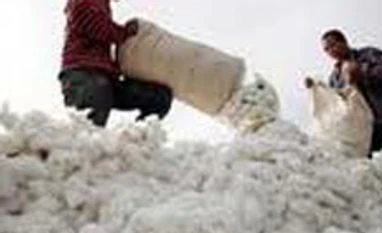 "Less demand, low price pulls down cotton ginning activity")


 Connect with us on WhatsApp