Maruti Suzuki has missed a date set earlier for entering the light commercial vehicle (LCV) segment, pointing to the activism against diesel use. The country’s largest car maker was to launch a mini truck, which it has been developing since 2013, before March 31.
Kenichi Ayukawa, managing director, said: “Launching the LCV this financial year is quite difficult. So much has happened against diesel. We have to carefully evaluate next financial year when we try to launch it.” This December, the Supreme Court put a ban for a while on sale of new diesel cars and SUVs having engine capacity of at least 2,000cc.
Read more from our special coverage on "MARUTI SUZUKI"
And, in the Union Budget announced last month for the coming financial year, small diesel cars were slapped with a 2.5 per cent infrastructure cess, while petrol models were levied only one per cent more. This is the first time a fuel-based taxation system was introduced in the small car segment.
Christened as Carry, the Suzuki LCV in question was aimed to take on the Tata Ace, a popular mini truck. The Carry is expected to have a payload of around a tonne. The LCV segment has just begun to show signs of revival, after three years. Domestic sales of LCVs — defined as vehicles having weight of not more than 7.5 tonnes — grew at an average of five per cent in the past four months, as against a fall of 7.4 per cent during the previous six months of April-September.
On the back of new launches, Mahindra & Mahindra, the segment leader, was the biggest gainer of the demand revival.
In January, the Mumbai-based company reported a jump of 10 per cent in sales for load-carrying mini trucks. This was followed by a nine per cent increase in sales by Tata Motors, the country's largest commercial vehicle maker, the same month.
While M&M launched the Supro Van and Supro Maxitruck in October, Tata Motors launched the Ace Mega, a 2.1-tonne mini truck, in August.
“Demand for LCVs is on account of both industrial and non-discretionary consumer demand for transportation of food items, as well as for transportation applications such as rural taxis. Considering the weakened demand for industry-related freight in FY16, sales volumes were largely driven by non-discretionary consumer demand,” said rating and research agency India Ratings.
Further, the entry of truck aggregators — most of which are start-ups like Grofers, The Porter, Turant Delivery and also a Mahindra-backed venture, SmartShift — is likely to power fresh demand for light trucks as existing assets get utilised more effectively.
Maruti will set up a separate line of dealership for the LCV venture. In the December quarter, it had announced plans for a dealership in each of the four corners of the country, as a start.

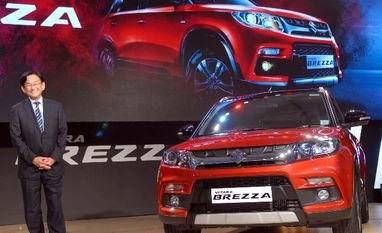 "Maruti's LCV launch delayed due to activism against diesel vehicles")


 Connect with us on WhatsApp