Faced with difficulties in disposing low grade iron ore, miners have urged the government to lower the export duty.
The government levies a 30 per cent tax on iron ore to discourage its export. Levying the duty two years ago, the government argued its aim was to preserve natural resources for extended use in India.
Reacting to the passage of the Mines and Minerals (Development and Regulation) (MMDR) Amendment Bill, 2015, by Parliament on Friday, RK Sharma, secretary-general of the Federation of Indian Mineral Industries (FIMI), said, “The reduction in export duty is needed as domestic steel mills do not use low grade fines because of the abundance of high grade supply. An export levy of 30 per cent makes India uncompetitive in global markets.”
India’s iron ore output, according to FIMI, was 124 million tonnes in 2013-14, of which high grade lumps with more than 63.5 per cent iron contributed just 20 million tonnes. The remaining 104 million tonnes of ore was excavated as fines that had less than 63.5 per cent iron.
Since low grade ore is not consumed locally, miners have no option but to export it to clear the minehead. But because of the export duty, India was unable to send shiploads of steelmaking raw material abroad. Exports of over 100 million tonnes four years ago slumped to 14 million tonnes in 2013-14.
“Miners are helpless because the government does not want to promote mining,” Sharma said.
Iron ore miners in Goa expect mining to start two years from now because of regulations. The Mines and Minerals (Development and Regulation) (MMDR) Amendment Bill bars miners from dumping residual stuff outside allotted mine areas. Goan miners are thus looking to dig deep wells to store discharged dumps.
“Drilling a deep well is not only time consuming but also cost intensive. Since, laws prevent miners from dumping outside allotted mine areas, they have no other option,” said Haresh Melwani, chief executive officer of HL Nathurmal & Co, a Goa-based iron ore miner and exporter.
Miners have sought a distinction between captive and non-captive mines, and an enabling policy for processing and improvement of mineral parameters.
This is relevant to the low grade ore in Goa, which if supported by policy, can attract investments for making it suitable as furnace feed.

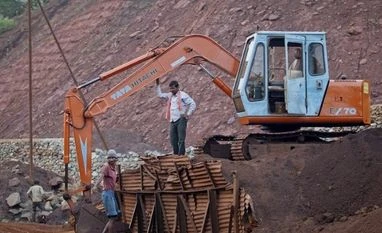 "Miners seek cut in export duty on low-grade iron ore")


 Connect with us on WhatsApp