Two years ago, this week, the reality of a pandemic sneaked up on India as it shut its doors for overseas visitors and the country went into lockdown.
As elsewhere, Covid-19 went on to wreck tourism and hospitality in India. But while the restaurant industry reported degrowth in the first pandemic year, the fear of the virus triggered a renewed interest in wellness. And luxury retreats have not only held off challenges faced by a pandemic-crippled industry, but are anticipating a rise in demand with the resumption of regular international flights, come Sunday.
Ananda in the Himalayas, a destination spa resort in the foothills close to Rishikesh, has witnessed an all-time high interest from foreigners after the issuing of tourist visas recommenced in December 2021.
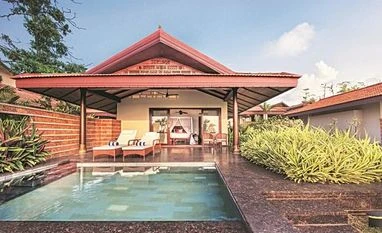
Mahesh Natarajan, chief operating officer of IHHR Hospitality Ananda, its owner company, says, “Several of our regular Ananda guests from various countries have written to us describing a void they have experienced these last two years where they could not continue their annual wellness programme.”
He adds that the luxury brand has received a glut of enquiries from overseas recently, especially for its panchakarma- (an Ayurvedic technique) and meditation-based programmes, reflecting the twin needs of physical and emotional cleansing and rejuvenation after such a challenging period. “Starting March-end, we expect a very buoyant demand from clients from the US, Western Europe, West Asia and other regions,” he adds.
A financial hub like Mumbai is already seeing pent-up demand from foreign business travel, points out Amruda Nair, director of Araiya Hotels & Resorts. However, she believes that the real impact for leisure tourism would be witnessed during the winter season from November to February. “In long-haul markets such as the US, there is certainly interest in the cultural, heritage, wellness and adventure destinations in India. I am already seeing returning guests from the US in my hospitality business in Europe,” says Nair, who runs operations under Araiya Malta in the European nation, apart from three resorts in India.
Allen Machado, CEO, Niraamaya Wellness Retreats, says their overseas clients — particularly from the UK, US and West Asia — are showing willingness to return to India. The war in Ukraine, however, has dimmed interest from CIS (Commonwealth of Independent States) countries, he adds.
“If international flights open up, we will see a good inflow and resurgence July onwards, particularly in the second and third quarters of this financial year,” Machado says.
Niraamaya runs wellness retreats (four in Kerala, one in Bengaluru and another in Kohima) and private residences (in Goa, Kerala and Karnataka). Earlier, 80 per cent of its visitors were from abroad. Post-Covid, that was reversed to more than 90 per cent in favour of domestic clients, who are extremely price-sensitive. Niraamaya had to restrategise its revenue model, and effect a drop of up to 40-50 per cent in tariffs.
There has been a major shift in how people choose their holidays, with hygiene and safety measures, less crowded destinations that are within a driving distance, and healthy cuisine forming a trend that is here to stay, says Machado.
Jose Ramapuram, executive director of Evolve Back Resorts, which got in touch with its foreign travel operators and destination management firms after a gap of nearly two years, expects overseas traffic to pick up only from October “as we now enter an offseason as far as inbound tourism is concerned”.
“We are, however, experiencing demand from long-distance travellers from within India,” he adds. “During the pandemic, we found a lot of regional travellers from within Karnataka (where Evolve Back has three properties) and nearby states.”
In November 2019, Evolve Back had also acquired its first international property in Central Kalahari. Botswana, where its resort is situated, had no domestic demand and catered only to the international market. Following the pandemic, for two years, it had few guests. But the African nation has now opened up, says Ramapuram, and Evolve Back is seeing a rise in international demand.
Back in India at Ananda, which offers the luxury of retreating to a secluded 100-acre forest estate reserved only for resident guests, the highlights include personalisation for every guest — be it wellness assessment and guidance, one-on-one sessions of yoga and meditation, or tailormade gourmet meals.
At Araiya’s 38-room Palampur resort in Himachal, overlooking the Dhauladhar range, as part of its new offerings are village walking tours and hikes in the mountains with trained guides from the neighbouring local community. These, besides boutique experiences, especially for intimate family gatherings and celebration.
Besides those who drive to the hills from places in the North within a four- to six-hour radius, there is an increased willingness to take single flights such as from Delhi to Dharamshala, Nair points out.
She cites a study by online travel firm Expedia last year, which suggested that the top drivers of value for people when booking hotels were enhanced cleaning measures, flexible cancellation policies and ease of refunds. She expects this trend to continue, even as luxury resorts expect increased demand with Indian tourism finally opening up.
Wellness in focus
Due to apprehension among guests to take taxis post-Covid, Evolve Back introduced helicopter rides. It runs daily flights to all three resorts. And, as people preferred exclusive experiences, it introduced private guided activities over shared ones.
The big shift for patrons at wellness retreats has been a more long-term focus on health. For Ananda, this has led to a substantial growth in guests pursuing longer term wellness programmes such as Ayurvedic rejuvenation, panchakarma, holistic or yogic detox or dhyana meditation, which require a minimum of one and three weeks.
As normalcy returns, there is also greater interest in returning to a sense of community and sharing of wellness experiences among guests.




