The telecom sector is going through a generational shift in technology, with several companies launching high-speed wireless broadband services through fourth generation (4G) networks. Business is clearly not as usual, with data rapidly increasing its revenue share and the traditional voice business slowing. Even so,
Sunil Sood, managing director and chief executive officer at the Indian arm of global major Vodafone, tells Malini Bhupta that multiple technologies will work here, as it is a vast country and the need for 2G and 3G will not go away soon. Edited excerpts:
Do you expect Reliance Jio to disrupt the market as it did in 2002, when rates dropped and the market exploded. Do you expect this in the data segment?
We choose not to comment on something which is still not in the market. We welcome competition and what we can do is to defend ourselves. The best defence is to provide a great customer experience and we continue to invest in that. In the past, we have seen that sharp price movements need not be a great thing. Consumer businesses are not about price alone but the value a customer gets for the price. Consumers will pay for the brand value, status value and a great experience.
We have the right portfolio for voice and data. Only three per cent of our consumers today have 4G phones. After so many years of 3G, only 28 per cent of our consumers have a 3G-enabled device and 42 per cent of phones sold in India are feature ones, below Rs 2,000. That is the primary reason we are looking at starting our 4G services in the top four cities, which account for just under 50 per cent of our data market.
The capital expenditure (capex) to sales ratio of India's telcos is 20 per cent, low as compared to global standards. Do Indian telcos have the ability to invest in capex to cater to the impending data boom?
The spectrum investment you have to do in India is higher than any other market in the world. To get effective usage of spectrum, we need to invest in more capex. To drive broadband access through mobiles, we need more spectrum but the amount available is low and pricing is high. The reason you need higher capex is because spectrum is scarce. More sites also do not necessarily mean a better network, as more sites beyond a point lead to more noise.
If you have to grow at 10 per cent annually, you need far greater intensity of capex, isn't it?
If you look at the next few years, we are comfortable with our investments and believe it will fuel growth. If you go further into the future, we will need more spectrum, as the physical constraints of mobile technology will come into play.
COAI (one of the provider associations, of which Vodafone is a member) has written to the department of telecom as it has a problem with the government looking at the latest auction (2015) price as the market one to liberalise spectrum in the 800 MHz band. Is it done to stall the launch of Jio?
All we have said is that there was no 5 MHz of 800 MHz band spectrum auctioned at many locations during the auction. If you sell anything less, you cannot use it for rolling 4G services. As a result, not many players bid for it and, hence, there was no battle for spectrum.The price, subsequently, was not discovered. For price discovery to happen, the government should have sold 5 MHz.
Is it not strange that though Jio is a part of COAI, it is not in agreement with this move? Will the matter go to court?
The industry body's view is the majority's view. We have no idea if the matter will go to court; the industry body will decide. Depending on how this develops, we will have to reassess what needs to be done.
RJio is expected to target the high-end consumers of incumbents. How do you intend to prevent customers from leaving your network?
To cater to customers, we need to understand their needs. We believe we offer a great service on voice and are investing to provide a great experience on data. Customer experience will determine how customers behave.
We are given to understand that a data call is significantly cheaper (six paise a minute against 36 paise for a voice call). What is the future of voice if consumers start to use data for calling?
We believe the price is more or less the same. We have seen the shift and increase in data consumption but voice is still over 80 per cent of revenue. So, it will continue play an important role for some time, as there is a large market that does not have smartphones.
The factory cost to produce a data or a voice call is the same but the margins are not the same. Eventually, calling over internet protocol will increase over time as the revenue contribution of data increases but, right now, we do not see too many people using data to make domestic calls. People do not realise that there is a cost attached to voice calls even when they are receiving these, as incoming is also not free. Customers do not realise that the multiple apps keep updating in the background and consuming data, which is not free. We are constantly educating customers on this issue.
Why is Vodafone not so enthusiastic about 4G?
It is an important technology but only one of the many we will offer. Customers who would be taking up 4G initially would be concentrated in the big cities. We will roll out in other parts when the timing is right. Today, consumer expectations are very different. I cannot start a service and say I will only give you 100 mobile sites in south Mumbai and then I will increase the coverage to other parts of the city. Today, if I need to launch in any large metro, I need a few thousand sites at the time of launch itself. I cannot scale up gradually. There has to be a reasonable network coverage to start a service. Roll-out of any new technology depends on how fast the system progresses on devices and availability of low cost multi-mode chipsets and handsets. We think the system has to move at a certain clip and then move in.
The government has indicated it is willing to settle with the company on pending tax disputes. Is Vodafone in talks with the government?
This needs to be addressed to our shareholders and is being dealt with at the group (global) level, as it pertains to the acquisition (of 2007). The matter, as we know, is under arbitration and we cannot comment.
How do you see the implementation of a penalty for call drops?
We need to work on this with all the relevant stakeholders. The minister has come forward to help us by giving us sites. We need help from the municipalities. In Delhi, we have an issue of the municipality shutting down sites, despite the fact that we have legitimate permissions. Our view is that we need to work together. We have appealed to the regulatory authority and the industry association has also written to the minister to help us and have further discussion. We are hopeful the minister will help us.
Is 4G more if hype and is that why Vodafone is only looking at launching 4G in metros?
We have never said we are not launching 4G pan-India. We have so far given a programme for the first phase of our rollout, between December and March next year. We have not given any public declaration on what we intend to do after that. India is many markets rolled into one. There are users of both the Mercedes and Nano (cars). The high-end consumers are no different from consumers of developed markets and they would like 4G. Multiple technologies will work in India, as India is a vast country. So, there will be a need for 2G, for 3G, and there is a market for 4G.

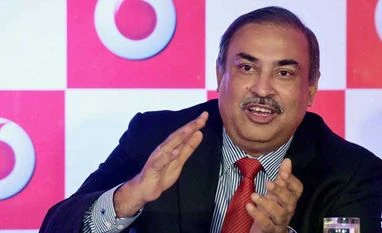 "Our best defence is to give great experience & Vodafone continues to invest in that: Sunil Sood")

