As the tide turned in its favour in the last financial year, Petronet LNG saw a good year both in terms of volumes and profitability. The renegotiated RasGas prices, which made imported gas competitive, boosted demand. The decline in domestic gas production further helped Petronet, which gets its revenues by largely importing gas and marketing it in the country. Continued capacity expansions also proved handy; it enabled Petronet double its net profit to Rs 1,235 crore in the first nine months of FY17. The March quarter is also expected to be robust. Not surprisingly, the Petronet stock recently scaled its all-time intra-day high of Rs 453.65. It closed at Rs 430.40 on Thursday, a gain of 63% in one year.
The outlook remains firm and there could be more gains ahead, as first, the demand for LNG (liquefied natural gas) remains strong. Second, Petronet is seeing gains from expanded capacities providing a volume boost. In fact, the company is planning more expansions which will accrue benefits till FY20.
LNG prices have also declined further over the past few weeks as supply outages in Australia have subsided. As production ramps up further in Australia and the US, more supplies are anticipated in FY18, which could add further pressure on LNG prices, a demand enabler. LNG prices have already declined to $5.2 per mmbtu (million British Thermal Units) from $9 per mmbtu at the start of 2017; current spot LNG prices are comparatively lower then Brent crude, which makes LNG more competitive than fuel oil, say analysts at Ambit Capital. Global demand-supply trends suggest LNG prices could face further downward pressure in FY18 which should boost off-take with industrial, consumer and refinery/petchem leading the next wave of demand over FY17-20, they say.
As LNG demand grows, Petronet is also increasing its capacities. It commissioned five million tonnes per annum (mtpa) capacity in October 2016 and another 2.5 mtpa LNG capacity at Dahej in Gujarat is expected in FY19. The five mtpa LNG capacity at Gangavaram in Andhra Pradesh is expected to come on stream by FY19/20. For the five mtpa Kochi terminal which remains underutilised currently, volume boost of 0.5 mtpa is expected from the second half of FY18 as Bharat Petroleum’s Kochi refinery expansion will be completed by the end of the June quarter. Also, another 1.5-mtpa demand boost will kick in from FY20 as the Kochi-Mangaluru pipeline comes on stream by FY19-end.
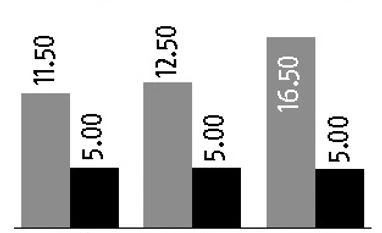
Analysts at HDFC Securities see volumes at the Dahej unit growing from 12.5 mtpa in FY17 to 16.5 in FY18. For the March quarter, Dahej’s volumes are seen growing 10% year-on-year (y-o-y) and regasification margins by 5% y-o-y. Analysts at Nomura estimate the company’s profits in the March quarter to increase by 60% y-o-y. They expect 98% capacity utilisation of 15 mtpa expanded Dahej capacity as the Kochi utilisation remains low.