Post $10.2-bn Lotte Confectionery takeover, Havmor streamlines logistics

The home-grown ice cream brand is paring down its distribution network as it nurtures a pan-India ambition
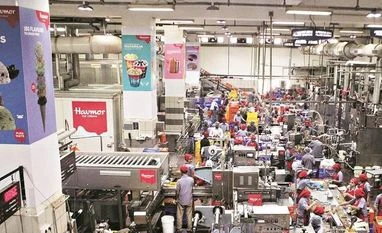
ice cream factory, havmor
Havmor uses third-party logistics services to meet its transportation needs
Sangeeta Tanwar
Last Updated : Apr 12 2018 | 6:29 AM IST
Home-grown ice cream brand Havmor has set its sights on becoming one of the top three in the country by 2020. And its acquisition by South Korean major Lotte Confectionery for Rs 10.20 billion late last year has fuelled Havmor’s plans to consolidate its position in markets down south—including Telangana, Andhra Pradesh and Karnataka-where it is relatively new.

A capital-intensive business, the fragmented ice cream industry in India is a competitive space to be in. But the roll-out of the goods and services tax (GST) holds out hopes for a regional and smaller player like Havmor to pare down its distribution and logistics network as it looks to expand.

“With regards to the distribution system, with the GST coming in, we have had a relook at our distribution structure and optimised it further to reduce costs,” says Vivek Chopra, chief operating officer, Havmor Ice Cream.

The Ahmedabad-based company has two manufacturing plants and 25 C&FAs (carrying and forwarding agents) catering to around 400 distributors and 40,000 dealers across 14 states. It uses third-party logistics services to meet its transportation needs, and over 150 refrigerated trucks to supply products right up to the distributor.

Earlier, like most businesses, Havmor’s distribution network comprising C&FAs was governed and dictated by state boundaries with the transfer of goods from one state to another not being favourable under the value added tax (VAT) regime VAT. With GST kicking in, the ice cream maker has been quick to reorganise and rationalise its C&FA network in select markets.

For example, in the pre-GST era, the company operated two C&FAs in Delhi. After GST, it closed one of the C&FAs in the national capital. At the same time, to save cost and ensure uninterrupted supply to dealers and distributors in the city, Havmor began supplying products to the market from C&FAs from the neighbouring states of Haryana and Uttar Pradesh. C&FAs located in Sonepat (Haryana) and Noida (UP) is taking care of supplies to Delhi.

Similarly, the company has let go of a super stockist in Gwalior, Madhya Pradesh. Instead, the supplies here now come from Aligarh which is closer to Gwalior. Post-GST, the distribution strategy for Havmor has been driven by a razor-sharp focus on optimising the supply chain by providing stocks to dealers and distributors from the C&FAs closest to them.

With changes in its supply chain, the company expects to save 5 to 10 per cent on distribution costs. This could bring in significant gains for Havmor in an industry which lacks a national player and is dominated by strong regional players. Barring Amul, which can claim to be a national brand due to its widespread distribution network, no other ice cream maker enjoys a pan-India presence.

According to Euromonitor, the ice cream and frozen food market is estimated to grow from Rs 117.43 billion in 2017 to Rs 187.86 billion in 2022. In terms of capacity the industry is forecast to grow from 4.5 lakh tonnes in 2017 to 5.5 lakh tonnes in 2022. The top brands are Amul, Vadilal and Mother Diary with a market share of 12.8, 6.2 and 4.9 respectively.

Havmor’s distribution system is largely driven by a few key factors like sales (current and future), service norms (turnaround time and fulfilment rate), number of distributors and distance (lead time) to the distributor. In ice cream or any other cold storage category, storage costs are huge because of specific infrastructure requirement (cold room, electricity costs, etc.). Transportation cost is even more given the rudimentary road network and low availability of on-demand refrigerated trucks. Therefore, Havmor sees merit in opening multiple storage points to be closer to the customer.

Chopra explains, “For the FMCG industry which supplies dry goods, the cost of transportation is less than the cost of storage. They can have one C&FA which supplies to the rest of the distributors in a region. But in the ice cream business it is the other way round. The cost of transportation of goods is more than that of storage. For us it makes sense to have multiple C&FAs.”

Such an approach, claims Chopra, helps reduce time to market and ensures the stock is in better condition. Multiple C&FAs also helps to optimise or reduce the number of vehicles to be used for moving the stock.

One subscription. Two world-class reads.

Already subscribed? Log in

Subscribe to read the full story →
*Subscribe to Business Standard digital and get complimentary access to The New York Times

Smart Quarterly

₹900

3 Months

₹300/Month

SAVE 25%

Smart Essential

₹2,700

1 Year

₹225/Month

SAVE 46%
*Complimentary New York Times access for the 2nd year will be given after 12 months

Super Saver

₹3,900

2 Years

₹162/Month

Subscribe

Renews automatically, cancel anytime

Here’s what’s included in our digital subscription plans

Exclusive premium stories online

  • Over 30 premium stories daily, handpicked by our editors

Complimentary Access to The New York Times

  • News, Games, Cooking, Audio, Wirecutter & The Athletic

Business Standard Epaper

  • Digital replica of our daily newspaper — with options to read, save, and share

Curated Newsletters

  • Insights on markets, finance, politics, tech, and more delivered to your inbox

Market Analysis & Investment Insights

  • In-depth market analysis & insights with access to The Smart Investor

Archives

  • Repository of articles and publications dating back to 1997

Ad-free Reading

  • Uninterrupted reading experience with no advertisements

Seamless Access Across All Devices

  • Access Business Standard across devices — mobile, tablet, or PC, via web or app

Next Story



