PSUs will account for significant capital raising: Sanjay Sharma
Interview with Managing director and head (equity capital markets), Deutsche Equities India
Reghu Balakrishnan Mumbai Since the Lok Sabha elections this year, about $9 billion has been raised through the equity fund-raising route. In this, Deutsche Bank has played a key role, helping YES Bank, GMR Infra, etc, raise funds through the qualified institutional placement (QIP) and offer for sale (OFS) routes.
Sanjay Sharma, managing director and head (equity capital markets), Deutsche Equities India, speaks to Reghu Balakrishnan about the Securities and Exchange Board of India (Sebi)'s moves to promote QIPs and popularise OFS among retail investors. He says public sector banks, too, will jump on the bandwagon and account for $1.5-billion offerings this year. Edited excerpts:
With the equity market sentiment improving after the general elections, are you seeing a lot of excitement on the deal front? On the equity side, many deals have been transacted after the elections. Of these, the Deutsche Bank group ran the $500-million YES Bank and $250-million GMR Infra issues. Discussions with companies have increased substantially and we think there are many quality issues in the pipeline. Disinvestment in public sector undertakings (PSUs) will account for a large piece of the capital-raising this year. Among PSU deals, based on public information, we feel the $4-billion Coal India OFS, the $375-million SAIL OFS, the $2.75-billion ONGC OFS and the $500-million NHPC OFS, apart from the Hindustan Aeronautics Ltd and Rashtriya Ispat Nigam Ltd initial public offerings (IPOs), are likely through the next six months. The other category will be public sector banks; we expect about $1.5-billion offerings from this sector this year. As a result, the disinvestment target of Rs 43,000 crore is likely to be met. About $9 billion has been raised so far this year, of which about 80 per cent has been through QIP/OFS and blocks. IPOs have a longer lead time; we expect that to happen in 2015.
So, will companies primarily raise funds through the QIP and OFS routes in the near term? Absolutely! Last year, Sebi had introduced the OFS and IPP (institutional placement programme) routes as quick and easy modes of fund raising for existing listed companies; this has become very popular with issuers. The scope of OFS has been widened and that has helped. We think these products, along with QIPs, will continue to be extensively used by listed issuers.
With so many issues coming into the market, do you think liquidity in the secondary market will be affected? This year, we have seen $12.3 billion of inflows from foreign institutional investors (FIIs) and about $5 billion of outflows from domestic mutual funds, banks and insurance companies, compared with $20 billion of FII inflow and about $12-billion domestic funds outflow last year. We expect domestic outflows will reduce, as mutual funds have already started showing inflows, after long. Given the tax change on debt mutual funds, it is expected equity funds will see more inflows. Institutional flows, coupled with direct investments by retail investors and high net worth individuals, will have a positive impact on markets. The expected rise in the supply of paper in the near future will have to be looked at in this context. Typically, the issuances aren't bunched, but phased, so that the impact is limited.
What about the interest in IPOs, following Sebi's decision to allow 10 per cent reservation for retail investors? This (reservation with a discount) will certainly help popularise the OFS product among retail investors, as was the case with institutional investors. Reservation of 10 per cent for retail investors in IPOs of companies that don't meet the profit criteria was primarily to ensure for these companies, institutional support was greater (75 per cent, compared with 50 per cent in other deals). Similarly, retail investors who might not necessarily have the wherewithal to assess such companies have limited exposure.
A different yardstick for retail investors? In our view, there is a clear difference in the requirements and approach to investment for the two investor categories---institutional and retail. This is in terms of the disclosure requirements of each category, as well as the approach to pricing. As far as pricing is concerned, retail investors are typically followers of QIBs (qualified institutional buyers); it might be better to encourage retail investors to enter the market through mutual funds/insurance companies rather than direct equity investments. This will also aid better price discovery and lead to a fall in the time and cost of issuances.
When will the IPO market see a significant revival? IPOs have a longer lead time. We feel there will be more filings with Sebi through the next few months; most are likely to hit the market in 2015.
Do you see any large issues hitting the market in the near term? While a few large offerings from listed companies are expected, we don't see any large IPOs hitting the market anytime soon. Sub-$500-million issues are likely. The internet and technology space has already seen a few rounds of private funding. So, it might not need to approach the IPO market anytime soon.

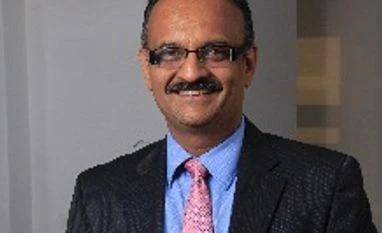 "PSUs will account for significant capital raising: Sanjay Sharma")


 Connect with us on WhatsApp