Home / Companies / News / Pvt firm Aadvik beats Amul to launch camel milk powder in India
Pvt firm Aadvik beats Amul to launch camel milk powder in India
Rajasthan based co sells camel milk powder, frozen camel milk, camel milk chocolates across country and abroad through online channels; plans camel milk soaps, other cosmetic products
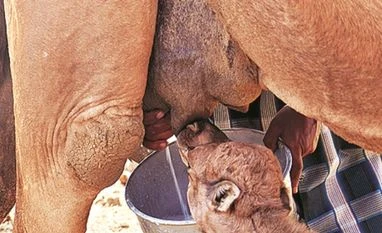
While Amul has been toying with the idea of launching camel milk for quite a while, Bikaner-based Aadvik Foods has beaten the dairy giant to bring not just camel milk, but even milk powder and chocolates to the Indian breakfast table.
Considered to have several health benefits, such as high insulin and vitamin content, milk from ‘the ship of the desert’ is slowly evolving as a niche dairy product. While prices are still prohibitive for mass consumption (Aadvik sells milk at Rs 400-450 a litre), consumers in metros are waking up to the goodness of camel milk which is an acquired taste given its salty nature.
Founded by a young engineer, Hitesh Rathi, who quit his job in Myanmar to start Aadvik (which means unique in Sanskrit), the company has chosen the online route to sell camel milk sourced from Rajasthan and Gujarat, across the country, in frozen form. Aadvik also makes camel milk powder (using the freeze-dried method) and markets it across India and abroad.
The venture that started about two years back with seed funds of around Rs 10-15 lakh (and is debt-free till date) handles about 8,000 litres of camel milk per month. It had started with procuring 80-100 litres a month from a non-profit organisation, Lokhit Pashu-Palak Sansthan (LPPS), in Rajasthan.
Rathi said, "Since the very beginning, we have focussed on marketing the product and not on procurement and processing. We chose the online route to reach out to as many customers as we can." It sends milk in frozen form to all parts of the country through courier service. The milk in frozen form has a shelf life of about three months. In powder form, it lasts up to nine months and Aadvik sells around 10 per cent of its products through online platforms outside India.
"We have recently listed on Amazon's US platform and also sell on eBay to reach out customers across the globe," Rathi said. The powder, however, costs around Rs 6,000 a kilo as the freeze-drying process is ten times more expensive than conventional dehydration techniques.
Aadvik, which has been careful not to sell at a loss, has been profitable since the first year of operations and has been ploughing back money from profits into the company. Rathi and his co-founder Shrey Kumar are now planning to enter cosmetic items such as camel-milk soaps.
"We are looking at developing cosmetic items, flavoured milk powders besides increasing our offline presence. Products like chocolates sell better in offline stores and we have already tied up with Future Group and have started selling our products in some of their outlets in the National Capital Region," Rathi explained.
Meanwhile, Gujarat Cooperative Milk Marketing Federation (GCMMF), which owns the Amul brand, too is gearing up for getting into the segment in a big way. R S Sodhi, managing director of GCMMF, recently said that camel milk chocolates would be sold at around 200,000 retail outlets across India. Kutch-based Sarhad Dairy, a co-operative affiliated to GCMMF, is already in the process of setting up a camel milk processing plant.
Rajasthan Cooperative Dairy Federation (RCDF) had ground-tested by launching camel milk under the Saras brand a few years earlier. Eventually, RCDF withdrew the product around 2010, as the demand fell after the initial euphoria. Low volumes and a short shelf life of the milk made the project unviable.
Rathi pointed out that the market for camel milk lies mainly in metros and that the product has to be marketed to a more discerning consumer.

 "Pvt firm Aadvik beats Amul to launch camel milk powder in India")









