Indian Hotels made loss, MD got 75% rise in commission in FY14
Companies repeatedly pay exorbitant sums to whole-time directors, mostly promoters
BS Reporter Mumbai
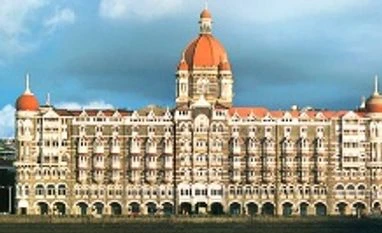
Indian Hotels Managing Director Raymond Bickson (pictured) received a 75 per cent rise in his annual commission to Rs 2 crore in the last financial year though the company made a Rs 590.5 crore loss on a stand-alone basis.
Bickson’s employment contract was renewed for five years from July 19, 2013. Under the new contract, salary and perks paid out to him were lower 8.5 per cent to Rs 8.4 crore in the year. But this was compensated by a steep rise in the commission and the total payout increased marginally to Rs 10.4 crore.
Some shareholders have criticised the rise in a year when the company made losses, citing the recent case of Tata Motors’ shareholders rejecting resolutions to seek approval for minimum remuneration in case of inadequate profits. But experts said Indian Hotels did not need shareholders’ approval for the remuneration proposal. That is because the company has reported profit excluding exceptional items. The company reported Rs 737 crore loss largely on account of impairment of some investments made abroad.
“The company may have structured the total compensation taking the Companies Act and Income Tax Act regulations into account,” said Shriram Subramanian, founder and managing director of proxy advisory firm InGovern Research. “We consider the total compensation payout, and that has not increased dramatically.”
According to the Companies Act, the total managerial remuneration of a public company should not exceed 11 per cent of the net profit according to Section 198, which excludes the exceptional items. And the remuneration payable to any one managing director or whole-time director should not exceed five per cent of the net profit. So, this does not require approval from shareholders.
“At a broader level, remuneration at the senior management must be looked at differently for professionals and promoters,” said Amit Tandon, founder and managing director of proxy advisory firm Institutional Investors Advisory Service. “Professional managers come with a set of skills and hence a market-acceptable price. While their remuneration must also be linked to the performance of a company, their overall remuneration must be comparable to sector peers and in line with the size of the company,” he said.
But companies repeatedly pay exorbitant sums to whole-time directors, mostly promoters. This is paid in excess of the limits, by obtaining shareholders’ approval. One such case was HCC, where the chairman and managing director was paid Rs 6 crore in 2011-12 and Rs 10.7 crore in 2012-13, while the company posted losses in the years. The company also obtained shareholders’ approval in the annual general meeting of 2013 to pay him Rs 10.7 crore for the next three financial years, irrespective of whether the company posted a net profit or loss.

 "Indian Hotels made loss, MD got 75% rise in commission in FY14")


