RBI turns down Kotak Bank's stake dilution plan

Bank says it has met requirement and will engage with central bank
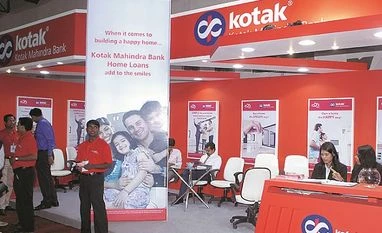
RBI turns down Kotak Bank’s stake dilution plan
Nikhat Hetavkar Mumbai
Last Updated : Aug 14 2018 | 7:49 PM IST
The Reserve Bank of India (RBI) has turned down the preference share issue by Kotak Mahindra Bank. The bank informed stock exchanges on Tuesday that the Reserve Bank of India (RBI) has communicated to it that its non-convertible perpetual non-cumulative preference shares (PNCPS) issue does not meet the central bank’s promoter holding dilution requirement.

“We continue to believe that we have met the requirement and will engage with the RBI in this behalf,” said the bank’s filing.

On August 2, the bank had issued one billion non-convertible perpetual non-cumulative preference shares (PNCPS) of face value of Rs 5 each to investors, amounting to Rs five billion.

The PNCPS was issued to diversify funding sources to optimise a mix of liabilities by channelising funds from alternative sources, at different price points and for varying tenures, the bank had said in an exchange filing on August 2. It would also help meet RBI’s requirement on shareholding.

The bank had said that the shareholding of the promoters of the bank, led by MD & CEO Uday Kotak, had come down from 30.03 per cent to 19.7 per cent after the issue.

According to Kotak Mahindra Bank’s information memorandum filed with stock exchanges, the RBI expects the private lender to reduce promoter holding to 20 per cent of paid-up capital by December 31, 2018, and 15 per cent by March 31, 2020.

The preference share issue boosted the bank’s paid-up capital to Rs 14.53 billion from Rs 9.53 billion. This brought down the promoter’s stake to 19.7 percent from 30.03 percent earlier, in line with the 20 per cent mark the bank is required to achieve by the end of this calendar year.

The PNCPS investors own 34.41 per cent stake in the post-issue paid-up capital. The public shareholding after the issue reduced from 69.97 per cent to 45.89 per cent.

The proceeds from the issue will help in augmenting additional tier 1 capital and overall capital for further strengthening its capital adequacy and for enhancing its long term resources. The funds will be utilised for regular business activities.

The PNCPS 2018 issue had opened on August 1 and closed on August 2. After the issue, the bank’s paid-up capital increased from Rs 9.53 billion to Rs 14.53 billion.

In the first quarter of FY19, Kotak Mahindra Bank reported a 17 per cent rise in consolidated net profit to Rs 15.74 billion on account of higher interest income and fee income.

The bank’s stock closed 0.31 per cent higher at Rs 1291.6 per share on the BSE on Tuesday.
Disclosure: Entities controlled by the Kotak family have a majority holding in Business Standard


One subscription. Two world-class reads.

Already subscribed? Log in

Subscribe to read the full story →
*Subscribe to Business Standard digital and get complimentary access to The New York Times

Smart Quarterly

₹900

3 Months

₹300/Month

SAVE 25%

Smart Essential

₹2,700

1 Year

₹225/Month

SAVE 46%
*Complimentary New York Times access for the 2nd year will be given after 12 months

Super Saver

₹3,900

2 Years

₹162/Month

Subscribe

Renews automatically, cancel anytime

Here’s what’s included in our digital subscription plans

Exclusive premium stories online

  • Over 30 premium stories daily, handpicked by our editors

Complimentary Access to The New York Times

  • News, Games, Cooking, Audio, Wirecutter & The Athletic

Business Standard Epaper

  • Digital replica of our daily newspaper — with options to read, save, and share

Curated Newsletters

  • Insights on markets, finance, politics, tech, and more delivered to your inbox

Market Analysis & Investment Insights

  • In-depth market analysis & insights with access to The Smart Investor

Archives

  • Repository of articles and publications dating back to 1997

Ad-free Reading

  • Uninterrupted reading experience with no advertisements

Seamless Access Across All Devices

  • Access Business Standard across devices — mobile, tablet, or PC, via web or app

Next Story



