Relaxation in PCA regulations may not help revive credit growth: Experts

High level of bad loans and dearth of capital lower lending capacity for banks, say experts
Relaxation in PCA regulations may not help revive credit growth: Experts
Shreepad S Aute
Last Updated : Nov 21 2018 | 12:44 AM IST
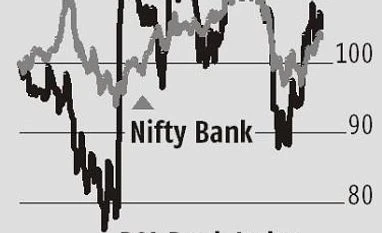
With no immediate relaxation for banks that are currently under the Reserve Bank of India’s (RBI’s) prompt corrective action (PCA), stocks of most PCA banks fell 2-5 per cent on Tuesday.

In order to improve credit growth, the government had demanded relaxation in PCA norms, which did not fructify in the RBI’s board meeting on Monday.

PCA banks have some restrictions in terms of lending and branch expansion, among others. Though the matter will be looked into by the board of financial services, the question for investors is whether the relaxation in norms will translate to significant improvement in credit growth or not.

A look at the credit share of the six public sector banks, which are probable PCA candidates, indicates the PCA relaxation may not help.

Apart from 11 PCA banks, Punjab National Bank, Union Bank of India, and Syndicate Bank, among others, may come under the PCA. 

In other words, the RBI has already given some leeway by not putting these banks under PCA yet, say experts. However, despite no operational restrictions, share of these probable PCA banks in total banking credit fell nearly 100 basis points year-on-year to 19.7 per cent as of September, thanks to elevated bad loans and a feeble capital base. In fact, according to ICRA, the solvency ratio of all PSBs stood very weak at 84 per cent. 

It stands worst at 132 per cent for PCA banks. Solvency ratio, which is net non-performing assets divided by net worth, indicates banks’ financial health.

“Relaxing PCA norms may help enhance credit to few specific segments, though it may not help much on the overall credit growth. Weak capital and elevated net non-performing assets (NPAs) or bad loans have marred PSBs’ lending appetite,” says Prakash Agarwal, head (BFSI), at India Ratings. 

Also, if any bank comes out of the PCA, it would pinch the government’s pockets due to additional capital requirements. Moreover, given the fiscal pressure, experts are skeptical of how much capital the government can afford to put in before its term ends in May 2019.

Therefore, how the combination of 2Cs (credit and capital), mainly for PCA banks, pans out in the days ahead is a key monitorable.

One subscription. Two world-class reads.

Already subscribed? Log in

Subscribe to read the full story →
*Subscribe to Business Standard digital and get complimentary access to The New York Times

Smart Quarterly

₹900

3 Months

₹300/Month

SAVE 25%

Smart Essential

₹2,700

1 Year

₹225/Month

SAVE 46%
*Complimentary New York Times access for the 2nd year will be given after 12 months

Super Saver

₹3,900

2 Years

₹162/Month

Subscribe

Renews automatically, cancel anytime

Here’s what’s included in our digital subscription plans

Exclusive premium stories online

  • Over 30 premium stories daily, handpicked by our editors

Complimentary Access to The New York Times

  • News, Games, Cooking, Audio, Wirecutter & The Athletic

Business Standard Epaper

  • Digital replica of our daily newspaper — with options to read, save, and share

Curated Newsletters

  • Insights on markets, finance, politics, tech, and more delivered to your inbox

Market Analysis & Investment Insights

  • In-depth market analysis & insights with access to The Smart Investor

Archives

  • Repository of articles and publications dating back to 1997

Ad-free Reading

  • Uninterrupted reading experience with no advertisements

Seamless Access Across All Devices

  • Access Business Standard across devices — mobile, tablet, or PC, via web or app

Next Story



