Swadhaar buyout to support RBL Bank's retail plans, regulatory needs

An established branch network in rural areas will help the bank sell its retail products, and improve priority sector lending in a cost-effective way
RBL Bank
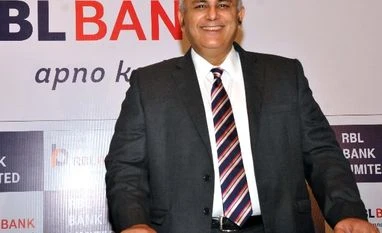
Vishwavir Ahuja, MD and CEO, RBL Bank at a press conference in Mumbai (Pic: Suryakant Niwate)
Shreepad S Aute
Last Updated : Jul 06 2018 | 12:00 AM IST
After a strong performance in 2017-18, investors have given a thumbs-up to RBL Bank’s move to hike stake to 100 per cent from the current 60.5 per cent in Swadhaar Finserve, which offers services in underbanked areas.

Since the announcement on June 28, RBL’s stock has gained about five per cent, outperforming the 0.4 per cent rise in the Nifty Bank index.

The deal is unlikely to boost RBL’s loan book directly since Swadhaar (the bank’s business correspondent), was sharing its entire loan book (Rs 20 billion as of March) with RBL even before. Even so, there are synergies to benefit from.

“The deal would help RBL expand reach in rural areas (the majority of its branches are in urban areas) through Swadhaar’s 331 branches across 16 states and two Union Territories,” said Harjeet Toor, head of RBL’s non-wholesale business. More, RBL can sell other retail products (those aimed at individuals) and increase cross-selling through this network, including lending to small and medium enterprises (SMEs), and micro finance.

Also, RBL’s priority sector lending, about 70 per cent of its non-wholesale book as of March, is likely to get a leg-up. In 2017-18, Swadhaar contributed about 14 per cent to RBL’s overall priority sector lending.

There are other cost and regulatory benefits. With Swadhaar’s branches, RBL would no longer need to spend extra to meet the Reserve Bank of India’s norm of 25 per cent outlets in unbanked areas.

Analysts expect RBL to clock 35 per cent growth in advances and a 30 basis point expansion in net interest margin to 3.8 per cent in 2018-19.

More, its non-performing assets (gross NPA were at 1.4 per cent of advances as of March) are likely to improve on the back of a strong loan book and improving recoveries across segments,” according to Payal Pandya, analyst at Centrum Wealth Research. She is positive on the stock.


One subscription. Two world-class reads.

Already subscribed? Log in

Subscribe to read the full story →
*Subscribe to Business Standard digital and get complimentary access to The New York Times

Smart Quarterly

₹900

3 Months

₹300/Month

SAVE 25%

Smart Essential

₹2,700

1 Year

₹225/Month

SAVE 46%
*Complimentary New York Times access for the 2nd year will be given after 12 months

Super Saver

₹3,900

2 Years

₹162/Month

Subscribe

Renews automatically, cancel anytime

Here’s what’s included in our digital subscription plans

Exclusive premium stories online

  • Over 30 premium stories daily, handpicked by our editors

Complimentary Access to The New York Times

  • News, Games, Cooking, Audio, Wirecutter & The Athletic

Business Standard Epaper

  • Digital replica of our daily newspaper — with options to read, save, and share

Curated Newsletters

  • Insights on markets, finance, politics, tech, and more delivered to your inbox

Market Analysis & Investment Insights

  • In-depth market analysis & insights with access to The Smart Investor

Archives

  • Repository of articles and publications dating back to 1997

Ad-free Reading

  • Uninterrupted reading experience with no advertisements

Seamless Access Across All Devices

  • Access Business Standard across devices — mobile, tablet, or PC, via web or app

Next Story



