The big screen experience

Will becoming an experience help multiplexes deal with film piracy and the growth of digital?
multiplex theatre, multiplexes, multiplex chains
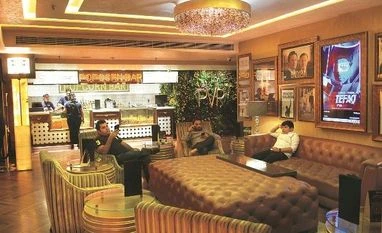
The average ticket price at PVR was Rs 196 in 2016-17. It is Rs 1,200 at Director’s Cut. (Photo: Dalip Kumar)
Vanita Kohli-Khandekar
Last Updated : Nov 01 2017 | 10:38 PM IST
Is it a multiplex or an experience? As PVR Cinemas, Cinepolis, Inox and Carnival among other multiplex chains spend crores building high-end lounges, recliner seating and restaurants the question is more than academic. About 12-15 per cent of the Rs 2,182-crore PVR Cinemas’ operating profits and 10 per cent of its revenues come from its high-end offerings such as Gold Class and Director’s Cut which brought in just about three per cent of its 75 million admissions last year. There is the usual recliner chairs, usher on call and so on. But Director’s Cut, launched in 2012, took the whole thing to another level with a sushi bar curated by Yutaka Saito, a famous Japanese chef, desserts from the very fancy patisserie L’Opera (added this year) and a wine lounge for its 1,000-odd Sapphire Club members. Incidentally they also get complimentary chauffeur-driven pick-ups and drops in an Audi, priority bookings and a dedicated relationship manager among other perks.

“The whole retail sector is changing and cinema is entertainment retail. Luxury is a misleading term (for what Director’s Cut offers) because it connotes expense. This really is about the experience,” says Renaud Palliere, CEO, The Luxury Collection.

Ajay Shah, partner, transaction advisory services, telecom, media and technology, EY, thinks that “in the long run a dedicated premium offering is a smart move. With the onslaught of digital, virtual reality, Amazon, Netflix and all the other services, cinema-going has to become an experience”. While digital has added to the revenues of the Rs 14,230-crore Indian film industry, it could, just like TV, reduce the audiences walking into a theatre. The number has been falling steadily over the years, thanks to piracy and TV.

The math and science of luxury

The maths is simple; it is the science of luxury within multiplexes that is complex.

The average ticket price or ATP at PVR was Rs 196 in 2016-17. It is Rs 1,200 at Director’s Cut. Note that the Rs 1,200 figure does not include spends on food and all the other bells and whistles where the differentiation and therefore the higher pricing kick in. The specifics on margins, costs, revenue expectations and the actual product differ hugely from chain to chain since each has a different take on luxury.

Cinepolis, the world’s fourth largest chain, had launched the recliner seat first in 1997, says Devang Sampat, director, Cinepolis India. In this country Cinepolis VIP has been available for four years now. Sampat explains that one recliner seat in the VIP section occupies 2.5 times the space of a regular seat. Therefore, “we need to get 2.5 times more revenue (on VIP) whether on food and beverages or on ticket sales”, says he. According to analysts if the gross margins on food and beverages are 75 per cent on the regular ticket, they are higher on a premium ticket. But it is also a “high-risk” strategy, says Shah. That is because ultimately if the content doesn't work and people don't walk in, all the luxuries on offer become a huge drain on operating costs.

Therefore, “chains have to be selective and careful about where to put up such screens”, says Shah. Currently, just 33 of PVR’s 600 screens have high-end offerings. Only 15 of Cinepolis’s 325 screens in India are branded VIP. “Megaplexes (such as Cinepolis) cater to all kinds of segments. It (VIP) is just another segment where the propensity to pay is higher,” says Sampat.

What is luxury

PVR’s gourmet-driven investment then is not true for the rest of the multiplex industry. Wave Cinemas, for instance, has a Platinum Lounge in two of its properties. But Yogesh Raizada, vice-president, Wave Cinemas, says it is more like a value added service where you buy a Rs 1,200 ticket and get a range of extra services like plush seats, an usher et al.

Dina Mukherjee, chief marketing officer, Carnival Cinemas, reckons, “The definition of luxury depends on the city. In many cities a neat clean hall is a luxury. Therefore Carnival is a luxury chain in tier-II and III cities. In mini metros it is in the value segment.” It offers marquee units and special lounges with wine and gourmet food in 10 per cent of its 115 locations (which house 425 screens). But, “we wouldn’t go competing with restaurants”, says she.

That is exactly where PVR has ramped up the game. “The content is not different. (Therefore) food is a big element of differentiation. There is a strong segment at the top where people are prepared to pay for a quality experience,” says Palliere. The big challenge—getting those people in. A mix of screens across the price spectrum therefore is critical.

Ajay Bijli, chairman, PVR Cinemas, reckons, “The criteria for return on investment (for PVR) remain the same whether it is a Rs 1.5-crore screen or a Rs 5-crore screen because for the lower cost screen the operating expenses are lower.” It plans to take its high-end screens from 33 to 73 in three years. There are plans to go to Dubai and other markets with the gourmet experience attached to Indian films.

Experience, it seems, is going places.

One subscription. Two world-class reads.

Already subscribed? Log in

Subscribe to read the full story →
*Subscribe to Business Standard digital and get complimentary access to The New York Times

Smart Quarterly

₹900

3 Months

₹300/Month

SAVE 25%

Smart Essential

₹2,700

1 Year

₹225/Month

SAVE 46%
*Complimentary New York Times access for the 2nd year will be given after 12 months

Super Saver

₹3,900

2 Years

₹162/Month

Subscribe

Renews automatically, cancel anytime

Here’s what’s included in our digital subscription plans

Exclusive premium stories online

  • Over 30 premium stories daily, handpicked by our editors

Complimentary Access to The New York Times

  • News, Games, Cooking, Audio, Wirecutter & The Athletic

Business Standard Epaper

  • Digital replica of our daily newspaper — with options to read, save, and share

Curated Newsletters

  • Insights on markets, finance, politics, tech, and more delivered to your inbox

Market Analysis & Investment Insights

  • In-depth market analysis & insights with access to The Smart Investor

Archives

  • Repository of articles and publications dating back to 1997

Ad-free Reading

  • Uninterrupted reading experience with no advertisements

Seamless Access Across All Devices

  • Access Business Standard across devices — mobile, tablet, or PC, via web or app

Next Story



