Video start-up can't outspend YouTube, so it created new currency
The first place the new economy will exist is within Rize, a new live-streaming app that YouNow is releasing in January
premium
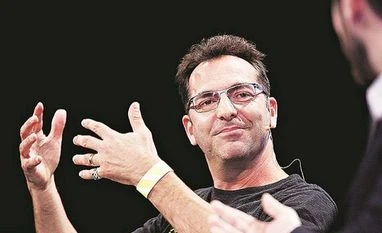
Chief Executive Officer of YouNow Adi Sideman is offering Props for free to other developers willing to distribute the currency to the services of their own user
Adi Sideman, the chief executive officer of the live-streaming start-up YouNow, spends his days hawking a new form of digital currency. The tokens are called Props — as in what you’re giving when you offer someone a fist-bump — and Sideman wants people who stream video online to accept them as a form of payment. Creating an economy based on Props is the centrepiece of Sideman’s plan to loosen YouTube’s hold on the internet. It’s a hopelessly audacious idea by any standard—except perhaps by the standards of those who trade in digital currencies, where YouNow’s long-shot makes perfect sense.
The first place the Props economy will exist is within Rize, a new live-streaming app that YouNow is releasing in January. People who use Rize will earn the tokens based on a mathematical formula determining how valuable their contribution to the service is. They can convert them into dollars or hold onto them as a bet that Props will increase in value over time. Sideman is offering Props for free to other developers willing to distribute the currency to the services of their own users. In theory, this will create a flywheel, where demand for Props gets people to use the apps, which further increases demand for Props, until a self-sustaining economy emerges.
YouNow, which will hold onto about a quarter of the total supply of the tokens, stands to profit as the value of the coins appreciate. If Props go to zero, it’s left holding nothing. Or almost nothing. Over the next two months, it will sell off 20 per cent of the total supply of Props and expects to raise $25 million doing so. There will be a billion Props in total —a number that won’t change over time—and YouNow is initially valuing each one at about 12.5 cents.
This sort of thing is in the air nowadays. In 2017, investors have poured over $3.6 billion into about 230 initial coin offerings, the term of art for this sort of token sale, according to the website CoinSchedule.com. The ICO boom is the latest incarnation of the fascination that certain tech and finance circles have for the blockchain, the technology enabling the exchange of virtual items without the control of a centralised entity.
Digital tokens based on the blockchain, often referred to as cryptocurrencies, have proved appealing as tools for speculators, since they’ll increase in value if the demand for their use grows. The most prominent is bitcoin, but there’s also ethereum (more flexible than bitcoin), NEO (ethereum for China) litecoin (bitcoin but faster), zcash (more private) and ardor (a blockchain for creating blockchains) — to name a few. A growing roster of entrepreneurs and venture capitalists say the technology could prompt the biggest change in the architecture of the internet since the rise of Facebook and Google.
That’s the bull case. As happens whenever a new, unregulated way for speculators to make money emerges, the ICO craze also has its share of shadiness, chaos and the threat of government crackdown. Promising projects have descended into infighting; banking regulators recently issued a statement seemingly aimed at Paris Hilton after she hyped a token called Lydian Coin; and Jordan Belfort, the real-life subject of “Wolf of Wall Street,” called ICOs “the biggest scam ever.” YouNow wants to thread the line between hype and skepticism. Sideman avoided using the term ICO, saying it carries “connotations of speculation.”
On Tuesday, the company announced it would sell the first batch of Props — between $13 million and $19 million worth — on November 29 through CoinList, which works only with accredited investors, and handles screening for compliance with money-laundering rules. YouNow will sell the rest of the batch of tokens to the general public in December and January. From that point on, people can acquire Props either by earning them by using services that have adopted them or by buying on exchanges that swap cryptocurrencies. There’s a pretty obvious bear case here. YouNow’s growth has slowed in the face of coe company’s way. But a brazen gamble beats the alternative.
“There were open questions about: How do they compete with Facebook and Google?” he said.
“It may be that this is the only way.”
YouNow has been holding a series of parties to drum up excitement for Props. It’s attempting to appeal to two crowds: people who might use a weird new live-streaming app and people who might invest real money into an unproven virtual asset.
The mixture made for an interesting crowd at the most recent event, at YouNow’s office near Times Square. Sideman, sporting a blue track jacket and bright red sneakers, did a presentation with Philip DeFranco, a popular YouTube creator; demoed the new app; and answered questions about liquidity in the Props economy. A handful of YouNow creators were in attendance – one hung out near the food table wearing a trench coat, pink boots and a pink sweatshirt, his hood pulled down low. At the bar, a JPMorgan Chase employee strategized with a friend about when to dump their investments in various cryptocurrencies. A nattily dressed former high school teacher quizzed Brukhman, of CoinFund, about a fine point of blockchain economics.




