But going back to the Beetle and the very construct of defining a halo car, the Volkswagen product had originally been designed as a mass product. In the present time, its successor might disappoint purists – served up with American Diner-style interior panels, a front-mounted engine, and the absence of exterior chrome trims as a deviation. Today, the Beetle is a luxury ride, with sporty turbo engines, a sunroof and a sticker price of Rs 3 million – almost as much as a BMW.
So, a car that was once iconic, became a cult car along the way and is a halo product now. That was almost the same arc for the Ford Mustang, which Lee Iacocca introduced in 1964 in an effort to juice up flagging sales for Ford, except that it was intended to be a sporty ride. Ford sold a half million Mustangs in its second year, and the car was re-launched in multiple variations. Today, it comes in bright colors, revved-up engines, and a price tag starting Rs 6.5 million. It has been relaunched purely to spur sales for the company’s other products. Originally an everyday sports car that became iconic with commercial success, it burnished itself deeper on consumer psyche after actor Steve McQueen’s 10-minute car-chase in Bullitt endowed the car with a cult classic status. Forty-five years later, it’s a halo car with little resemblance to the original in engine, interiors, performance or body.

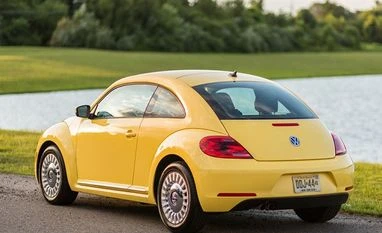 "Volkswagen Beetle to Ford Mustang: Why every carmaker needs a 'Halo car'")









