The JSW Group is one of the actively picking up stressed assets. In an interview with Jyoti Mukul and Shreya Jai, Prashant Jain, joint managing director and chief executive officer (CEO), JSW Energy, shares his company’s plans to buy stressed assets both outside and within the scope of the Insolvency and Bankruptcy Code and foray into electric car manufacturing. Edited excerpts:
How far have you progressed on electric car manufacturing?
We have been working on building organisational capabilities. We have 35 people on board. Sergio Luiz Rocha, former president and CEO, GM Korea, is our chief operations officer and Rakesh Srivastava, former director, sales and marketing, Hyundai, is sales and marketing director. We are working with the government of Maharashtra on the project. We are evaluating various options, including building on our own with the help of a global engineering service provider. The identification of land in industrial areas is in progress. We will be good to go in the next six months.
Aren’t there enough automobile manufacturers? Or is it that you see synergy within the JSW group for this?
China, with a similar kind of population, is producing 30 million cars and India 3.7 million. India will reach that level in 20-30 years. So the opportunity is huge. There is a level playing field since everyone has to shift to new technology. We are a conglomerate and it is not important to have synergy. We would like to be in a business where there is opportunity and where we can add value for shareholders. That’s why we entered the sports, paints and cement businesses.
What kind of car will it be?
It is too early to talk about that. Product strategy will be announced later. We are looking at the fast-moving segment — a car which will be for the Indian working class and Indian roads. We are anticipating a Rs 65-billion capital expenditure on the project.
Are you looking at greenfield investment in power generation or would you buy stressed assets?
The power sector is in stress and we feel consolidation is likely to happen. We will evaluate opportunities. We could not see meaningful resolution outside the National Company Law Tribunal (NCLT) because of a number of issues. Right now most of the power assets are in the admission stage. There is a lot of uncertainty because of litigation on the Reserve Bank of India’s February 12 circular. As and when assets go to the NCLT and even outside, we will be interested.
Each asset has unique problems, whether it is power-purchase agreement (PPA), fuel or capital. We are one of the most efficient power companies and have one of the strongest balance sheets. We are looking at assets that use domestic coal and the logistics cost is minimum and where we can do projects at low cost so that power tariffs are low. The problems of PPA and coal can be resolved over a period of time. We can factor in two to three years of delay and accordingly form the capital structure.
Any Mw target or specific sectoral distribution in terms of renewable, thermal, etc?
The long stop date was extended till June 2019. JSPL has to meet certain conditions. We are yet to hear from them.
Do you see the demand for power rising and how far will it push up investment?
GDP-to-power demand elasticity is one but you saw lower demand during 2012-17 because of government emphasis on efficiency through the use of light emission diode (LED), the PAT (Perform Achieve and Trade) programme for industry, and reduction in aggregate technical and commercial losses. The five-year compound annual growth rate of GDP was 6 per cent but the power demand grew only 4 per cent. However, it grew last year 6.1 per cent. In the second quarter (ended September 2018), power demand growth was close to 7 per cent. I think demand growth would trend at 6.5-7.5 per cent.

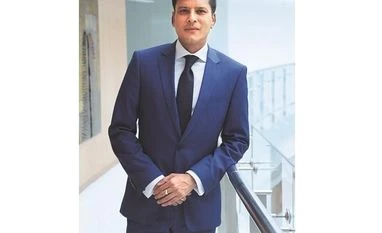 "We keep evaluating demand, calibrate accordingly: JSW Energy Joint MD & CEO")












 Connect with us on WhatsApp