Quadria Capital, set up in 2012, is a healthcare focused fund operating in India, with investments in Malaysia, Indonesia, Singapore and Vietnam. Its co-founder Dr Amit Varma spent ten years in the US before getting back to India in1999 to join Dr Devi Shetty's team, managing his Intensive care units at Manipal Hospitals and Narayana Hrudayalaya.
However, the lure of business and not just clinical delivery brought him to Fortis Healthcare. He joined in 2003 and over the next ten years gathered what he calls a crash course in business management, getting a taste of everything from physician recruitments, managing projects to managing P&Ls of hospitals. He was also part of the team that worked on the M&A of Wockhardt Hospitals and Escorts Hospitals.
Varma had a stint at Religare, investing in healthcare businesses in South East Asia. Eyeing a bigger space in healthcare, not just hospitals, he quit the group in 2012 and set up Quadria with Abrar Mir, who had invested in healthcare portfolios for nearly 20 years. With nine previous businesses that they exited -- five in India, four in South East Asia -- it was an eclectic portfolio to manage. Excerpts from an exclusive interview.
What was the strategy behind investing in Kanpur-based Regency Hospitals and Kolkata-based Medica?
There are two type of Hospitals in the private space -- the bread-and-butter and the multi-speciality, which usually starts as a standalone and then spreads to different geographies. If you have that one location which is like a beacon, you will attract the best talent, get the best infrastructure and equipment and once you have the volumes, you bring your prices down to become market sustainable. Then you set up spoke hospitals, which should be able to do 80 per cent of work done in the hub, using telemedicine strategically.
Both Medica and Regency are significant regional players that understand the local market. Medica has the largest network in eastern Indian covering 550 million people. Regency is the largest in UP, with a population base of 210 million people. Both markets are underserved with bed/population ratio of 4:10,000 as against the national average of 9 per 10,000.
What is the support that you offer to Asian Institute of Gastroentrology?
When it was set up 15 years ago, Asian Institute of Gastroentrology, Hyderabad, wanted to be the best in gastric sciences in Asia. That approach worked well for them, as it did for Escorts (cardiac science). They offer the entire spectrum of gastric care, they excel at what they do and their prices are the lowest, given their volumes. Their endoscopy is an entry-level diagnostic test. At less than Rs 1,000 it's one third the market price.
Very rarely does a patient turn up with just one disease, and someone who comes to you with a gastric problem may other complications too. Treating him for just one ailment and sending him to other service providers is unfair and emotionally difficult for the patient. The new 900-1,000 bedded hospital at Gachibowli, Hyderabad, will take care of patients holistically.
Apart from gastric and gastric-affiliated specialities, four other co-morbid conditions -- oncology, cardiac, kidney and endocrinology or diabetes -- will be offered.
AIG is also doing some incredible research. How are you looking at it as investment partner?
I believe research should be self-sustainable and shouldn't need to become an economic multiplier. During my years in the US I saw how successfully big hospitals there have integrated patient care, training and research under one roof. You rarely see this in India.
AIG has a completely different approach, which we saw for the first time in a private hospital. They've integrated academics and research and are able to sustain that model.
The research has built great credibility. It isn't just a place that delivers great clinical care and outcomes. It also has great doctors who are interested in research and believe in working for society. The clinical team has stuck together for over 15 years and wouldn't leave the institution just for money.
What do you bring to the table as investors?
I'm a doctor, an intensivist, so doctors know me for my clinical background.
We raised $300 million in our first round of funding. We aren't moneylenders. If all a company needs is finance then we are the wrong people. We're strategic investors and will put in money only if we can add value. Our diligence process takes us a long time -- almost three to four months. We use experts to validate the information given to us. After the process, we sit across and list out the things that could be changed and we commit to taking care of them.
How much have you invested in the hospitals?
We have a wide portfolio of hospitals, pharma, allied healthcare service, diagnostic labs. In a single company, the stake has to either be majority or a significant minority -- never less than 25 per cent.
Where has Quadria invested?
Currently we have nine investments, with majority ownership in five and a significant minority in four.
We've invested in Concord Biotech in Ahmedabad, we own Healthcare at Home, Strand Life Sciences in Bengaluru, Medica Hospitals and Regency Healthcare.
In South East Asia, we've invested in Soho', one of Indonesia's largest pharmaceutical companies, MWH, Singapore's largest physician practice, FV Hospital in Ho Chi Minh City, Vietnam, and Lablink, Malaysia's largest chain of Pathology Labs,
Till date we have invested $450 million though we had raised $300 in our first round.
When do you exit a deal?
We are long-term partners with an investment horizons of four to seven years.
What kind of an advantage do you bring to Pharma companies?
There are some really good Indian pharma companies that are creating niche products, have one or two factories and now want to scale up. That's how Concord came in. They are the world's largest API salt manufacturer for transplant medication -- immuno-suppressant.
Our support has been in building the formulations business, which US FDA and European FDA have approved and certified. We are helping them get global access, and have opened up a network through people in our team.
Our operating partner, Hank Klakurka, former CEO at Merck Generic Global, has opened the US market. Charles Antoine Janssen is the family owner of UCB, one of Europe largest pharmaceutical companies. He accessed the European market.
What is your strategy for South East Asia?
Southeast Asia is an emerging market like India. Singapore is the only mature market. The theme is exactly the same as India.
All our investments stand alone on their own merit. So while our Vietnam Hospital talks to our Singapore doctors, it works entirely independently. It is hard to find the best interventional cardiologist in Vietnam. Though they've built the best Cath lab, the talent for it comes from Singapore. A the same time the Singapore doctors are training those in Vietnam to build a self-sustainable model. We are also stitching collaboration between AIG and FV to build a strong training and technology transfer platform for gastric sciences. They are all fee for service models though.
MWH, Singapore, is the largest cardiology practice there. But when we came in, we added other specialties. Now we have 11 specialities and 28 doctors in one unified group. We offer cardiology, urology, neuro-radiology. We also own the outpatient services for your diagnostics, but if you need an intervention, we'll send you to Parkway for treatment and charge Parkway a reference fee. We call it Hospital without a hospital. We plan to take this model across South East Asia.
Does cross pollination of models and ideas happen in the geographies you operate in?
We borrow all the time, we borrow from across the globe, we borrow whenever we like something. I believe a time will come when we will have physician practice in India. Currently, doctors are either salaried employees who cannot be held liable for negligence, or there is the commercial model of fee for service. I think there is place for a third model in which physicians are part of the corporate ecosystem and are given incentives on value-based healthcare performance.
We strongly believe in ethical practices and compliance. We invested in Soho in 2014. In Indonesia, it was common practice to give envelopes full of cash to the doctor for a prescription. We refused to support this practice and revenues nosedived almost 40 per cent. Our Ebitda margins were squeezed. Interestingly, six months later we started seeing an upswing. Reputation building takes time.
Why Quadria?
A common belief, a philosophy helped us when we set up the fund. My partner and co-founder Abrar Mir, comes with banking and investment experience, I come with clinical and operating experience. Putting these two together, we played up each other's strength. We decided to become sector specific because we believe healthcare and education are core infrastructure. There is no government in this region which is spending enough in physical infrastructure. Investments in healthcare and education will take a long time before people start seeing the benefits but we also realise that to succeed in healthcare you need to understand it.
While the $450 million we have spent in Asia is a drop in the ocean, we thought that if we do it, we will do it really well.
We are a sub-hundred-million-dollar investor. Forty million to 100 million is our sweet spot.. To deploy up to $100 million, the company has to be a certain size looking for strategic growth.

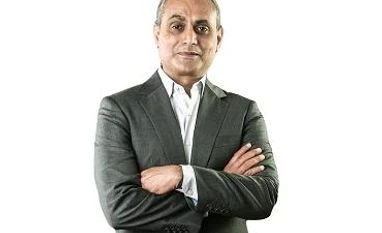 "We target firms with holistic healthcare view: Quadria Capital co-founder")












