36 cases of XBB found in Maharashtra; experts worry about long Covid
The number of cases of XBB subvariant of Omicron in Maharashtra has reached 36, the health department said on Saturday, adding that in most of these cases patients recovered in home isolation
Press Trust of India Mumbai The number of cases of XBB subvariant of Omicron in Maharashtra has reached 36, the health department said on Saturday, adding that in most of these cases patients recovered in home isolation.
The experts on the state government's COVID-19 Task Force, however, expressed concern about rising cases of 'long COVID' at a recent meeting, it said.
Pune district has reported 21 XBB cases to date, followed by 10 in Thane, two in Nagpur and one each in Akola, Amravati and Raigad.
Two of the XBB patients were in the 11-20 age group, 13 in the 21-40 segment, 14 in the 41-60 category and seven were over 60. The patients comprised 22 males and 14 females.
"Nine of the 36 patients had some symptoms, while others displayed mild symptoms or were asymptomatic. A total of 32 patients recovered in home isolation and the rest four had to be hospitalised as a precautionary measure or due to lack of necessary conditions for home isolation," the release said.
No "atypical" symptoms were found in any of these 36 patients and none of them required oxygen or ventilatory support, it added.
Barring two of the 36 patients, all had been vaccinated, and five had taken the booster dose as well. Six XBB patients had been diagnosed with COVID-19 earlier.
Against the backdrop of the XBB detections, a meeting of the State COVID-19 Task Force was held on October 24.
"After studying the XBB variant found in Maharashtra, Singapore and elsewhere, (it has been observed that) even if the infections increase, the new variant seems mild and most patients could be treated in home isolation. Minimal number of patients may need hospitalization," the release said.
However, experts on the task force expressed concerns about 'long COVID'.
"Incidence of conditions such as diabetes, brain fog and heart diseases seem to be increasing. Therefore, monitoring and follow-up of COVID-recovered patients is necessary, the release said.
The experts instructed that it would be beneficial to wear masks in hospitals and clinics by health workers and others.
'Long COVID' is the term used for mid- and long-term effects that persist after a person recovers from the initial coronavirus infection.
(Only the headline and picture of this report may have been reworked by the Business Standard staff; the rest of the content is auto-generated from a syndicated feed.)

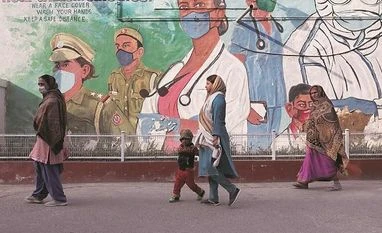 "36 cases of XBB found in Maharashtra; experts worry about long Covid")


 Connect with us on WhatsApp