Questions swirl over the Indo-French announcement in Paris on Friday that India had requested for 36 Rafale fighters in flyaway condition, to remedy a dire shortfall of fighters in the Indian Air Force (IAF). On Saturday, Defence Minister Manohar Parrikar told PTI in Goa that these 36 fighters would join IAF service within two years.
A key question this raises is: Are these 36 fighters in addition to the 126 fighters being currently negotiated between Dassault and the Indian defence ministry under the medium multi-role combat aircraft (MMRCA) tender, floated in 2007, which still remains mired in disagreement?
The Indo-French joint statement, issued in Paris late on Friday night, indicates the 36 fighters requested by Prime Minister Narendra Modi are separate from the 126 being processed under the MMRCA contract. The statement says Modi and French President Francois Hollande "agreed to conclude an Inter-Governmental Agreement for supply of the aircraft on terms that would be better than conveyed by Dassault Aviation as part of a separate process underway…"
It said the delivery of the 36 Rafales "would be in [a] time-frame that would be compatible with the operational requirement of IAF." An Inter-governmental agreement on a particular acquisition exempts it from the constraining rules that govern defence ministry procurement.
French media sources say the 36 Rafales agreed on Friday would be adjusted against the "options" clause of the Indian tender, which allows for buying 63 additional fighters, over and above the 126 Rafales in the basic tender. If that were true, the number of Rafales that will sport IAF roundels has already risen from 126 (six squadrons) to at least 162 (eight squadrons). If the options clause is eventually exercised in full, the IAF will operate 189 Rafales, i.e. nine squadrons.
With the IAF now down to 34 squadrons against the authorised 42, the induction of nine Rafale squadrons would assuage concerns about a strength shortfall in a two-front war. These would add to the 4-5 Sukhoi-30MKI squadrons that would additionally be inducted by 2018-19, even as MiG-21 and MiG-27 squadrons are retired. "The Indian Air Force will get minimum oxygen (relief) it required with this deal," said Parrikar.
Yet, there is skepticism, especially within Hindustan Aeronautics Ltd (HAL), about whether the tender for 126 Rafales could survive the purchase of 36 fighters in flyaway condition. "The defence ministry was doubtful about being able to afford even 126 aircraft; how can it now suddenly afford 162 Rafales?" wonders a senior HAL official.
The need for more fighters has been extensively debated, but the stumbling block has been the Rafale's forbidding cost. Worryingly, the government is silent on what it is paying, nor do the 20 agreements signed in Paris on Friday include anything on the 36 aircraft being bought. By conventional contracting norms, an "options clause" allows the buyer to procure additional equipment at the same price as the primary contract.
In this case, the pricing has been effectively reversed. Fixing the cost of the 36 additional "options" in advance would effectively pre-determine the outcome of the ongoing negotiations for 126 Rafales, i.e. the primary MMRCA contract. Even so, Parrikar lauded the purchase, terming it "a great decision taken by Prime Minister Narendra Modi on better terms and conditions."
Prominent amongst the unanswered questions is how the purchase of flyaway fighters squares with Modi's 'Make in India' rhetoric. After the prime minister visiting the Airbus facility at Toulouse on Friday, Airbus chief, Tom Enders stated: "We support Prime Minister Modi's 'Make in India' call and are ready to manufacture in India, for India and the world."
Yet, the one major deal agreed during this visit saw India shifting away from an ongoing negotiation to manufacture in India, instead going in for a multi-billion dollar purchase that is critical to the survival of Dassault, a company that supports 11,600 French jobs and reported revenue last year of ^3.68 billion.
In the absence of official information, there is unconfirmed speculation about the Rafale deal being a quid pro quo for nuclear technology, particularly a miniaturised reactor that could power India's emerging nuclear submarine force.
What is clear is that Paris has ticked every major button of strategic partnership during this visit. The joint statement says: "France reaffirms its support for India's candidature for a permanent membership of the UNSC without further delay… France and India committed to continuing to work jointly towards India's accession to the multilateral export control regimes, namely, the Nuclear Suppliers Group, the Missile Technology Control Regime, the Australia Group, and the Wassenaar Arrangement. France especially reaffirmed its strong and active support to building consensus among regimes' members on this issue."

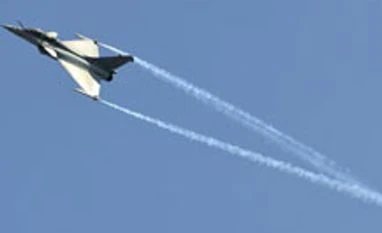 "36 Rafales to join Air Force in 2 years")


 Connect with us on WhatsApp