Home / India News / After roll out of NEP, class 10, 12 boards should be discontinued: Sisodia
After roll out of NEP, class 10, 12 boards should be discontinued: Sisodia
Deputy Chief Minister Manish Sisodia on Thursday recommended that after the roll out of the new National Education Policy (NEP), board exams for class 10 and 12 should be discontinued.
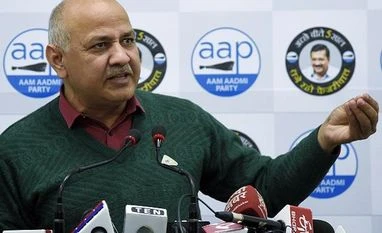
Delhi Deputy CM Manish Sisodia addressing a press conference in New Delhi. Photo: ANI
Deputy Chief Minister Manish Sisodia on Thursday recommended that after the roll out of the new National Education Policy (NEP), board exams for class 10 and 12 should be discontinued.
Sisodia also suggested that the government must introduce multi-year stage-wise classes and external assessment at the end of each stage
He made the suggestions during the 57th General Council Meeting of the National Council of Education Research and Training (NCERT) chaired by Union Education Minister Ramesh Pokhriyal 'Nishank' and attended by state education ministers
Sisodia pointed out that the '5+3+3+4' model recommended in the NEP can attain its full potential if the existing one year per grade system is removed.
"It means, instead of existing class system where all children of a class move together in all subjects despite being at different learning levels, multi-year stage will help child move as per their learning need in different subjects at their own pace. A stage-wise curriculum with a clearly stated learning goal in terms of knowledge, skills and values be created," he said.
"Going by the logic of the stage, after the full roll out of NEP, class 10 and 12 board exam should also discontinue. The existing board exams made sense in 10+2 model but not in 5+3+3+4. Retaining two board exams in one last stage will dilute the significance of first three stages in the school life of children," he added.
Sisodia, who is also Delhi's Education Minister, noted that when the mandate of the National Testing Agency (NTA) is to conduct entrance exams for admissions in higher education institutions, there is no need for class 12 board exams.
"Hence, the class 12 board exam should not be a high stake exam anymore. It is about time that we introduce multi-year stage-wise classes and external assessment at the end of each stage replacing the existing year wise classes and two board exams in class 10 and 12," he said.
Transformation should be holistic and not piecemeal. Instead of existing class system where all children of a class move together in all subjects despite being at different learning levels, multi-year stage will help child move as per their learning need in different subjects at their own pace. We recommend stage wise curriculum with a clearly stated learning goal in terms of knowledge, skills and values," he added.
The NEP approved by the government last month replaces the 34-year-old National Policy on Education framed in 1986 and is aimed at paving the way for transformational reforms in school and higher education systems to make India a global knowledge superpower.
Teaching up to Class 5 in mother tongue or regional language, lowering the stakes of board exams, a single regulator for higher education institutions, except for law and medical colleges, and common entrance tests for universities are part of the sweeping reforms in the NEP.
Replacing the '10+2' structure of school curricula with a '5+3+3+4' curricular structure corresponding to age groups 3-8, 8-11, 11-14 and 14-18 years respectively, scrapping M.Phil programmes and implementing common norms for private and public higher education institutions are among other salient features of the new policy.
(Only the headline and picture of this report may have been reworked by the Business Standard staff; the rest of the content is auto-generated from a syndicated feed.)

 "After roll out of NEP, class 10, 12 boards should be discontinued: Sisodia")


 Connect with us on WhatsApp